

Where Did Golden Retrievers Come From? Their Scottish Origin Story
If you’ve ever wondered where your Golden Retriever got that sunny personality and obsession with fetch, their story starts in the rugged, misty Scottish Highlands. Back in the mid-19th century, a nobleman named Lord Tweedmouth set out to create the perfect gundog on his Guisachan Estate, and in doing so, gave us the amazing family member we know today.
So, let's set aside the old tall tales about Russian circus dogs and dig into the real history.
The Real Story Behind Your Golden Retriever's Roots

Every time your Golden gently carries a squeaky toy or looks up at you with that classic, eager-to-please smile, you're seeing a piece of their history come alive. This isn’t just a fun fact; it’s a story of purpose, vision, and one dedicated man in Inverness, Scotland.
A Visionary Breeder and a Golden Dog
The journey began around 1865. Lord Dudley Marjoribanks, later known as Lord Tweedmouth, bought a striking yellow Wavy-Coated Retriever named Nous from a local cobbler. Nous was special: he was the only yellow pup in an entire litter of black retrievers.
Lord Tweedmouth brought Nous to his vast, 20,000-acre Guisachan Estate, which was the perfect place to develop a top-tier hunting companion. He had a clear goal: to breed a dog with a gentle mouth for retrieving birds, the stamina to swim in cold Scottish lochs, and a deeply loyal, trainable spirit. To achieve this, he paired Nous with a Tweed Water Spaniel named Belle. This now-extinct breed was known for its intelligence and impressive skills in the water.
The very first litter produced four yellow female puppies: Cowslip, Primrose, and Crocus. These four became the foundation for nearly every Golden Retriever in the world today.
For a quick overview, here's a snapshot of the key players and places that shaped the breed.
Golden Retriever Origin At a Glance
| Key Element | Description |
|---|---|
| Founder | Lord Tweedmouth (Dudley Marjoribanks) |
| Location | Guisachan Estate, Inverness-shire, Scotland |
| Time Period | 1865-1890 |
| Foundation Sire | Nous (a yellow Wavy-Coated Retriever) |
| Foundation Dam | Belle (a Tweed Water Spaniel) |
| Key Offspring | Cowslip, Primrose, and Crocus (the first litter) |
| Original Purpose | A skilled gundog for retrieving birds on land and water |
This table neatly sums up the thoughtful process that gave us the Goldens we cherish.
Debunking the Russian Circus Dog Myth
For years, a romantic but completely false story made the rounds, claiming that Goldens descended from Russian circus dogs. It was a fun story, but that's all it was.
The truth is found in Lord Tweedmouth's meticulously kept studbook, now preserved by the UK's Kennel Club. His detailed records confirm the breed's true Scottish lineage and the specific dogs that started it all. You can explore the official breed history to see how this documented evidence finally put the circus tale to rest.
This Scottish origin isn't just trivia; it explains so much about the dog curled up at your feet. That love of water, the famously soft mouth, and the incredible bond you share were all purposefully woven into their DNA over 150 years ago. It’s a legacy that inspires the joyful, breed-celebrating designs we love to create at Golden Prints.
Meet Lord Tweedmouth: The Man with a Vision
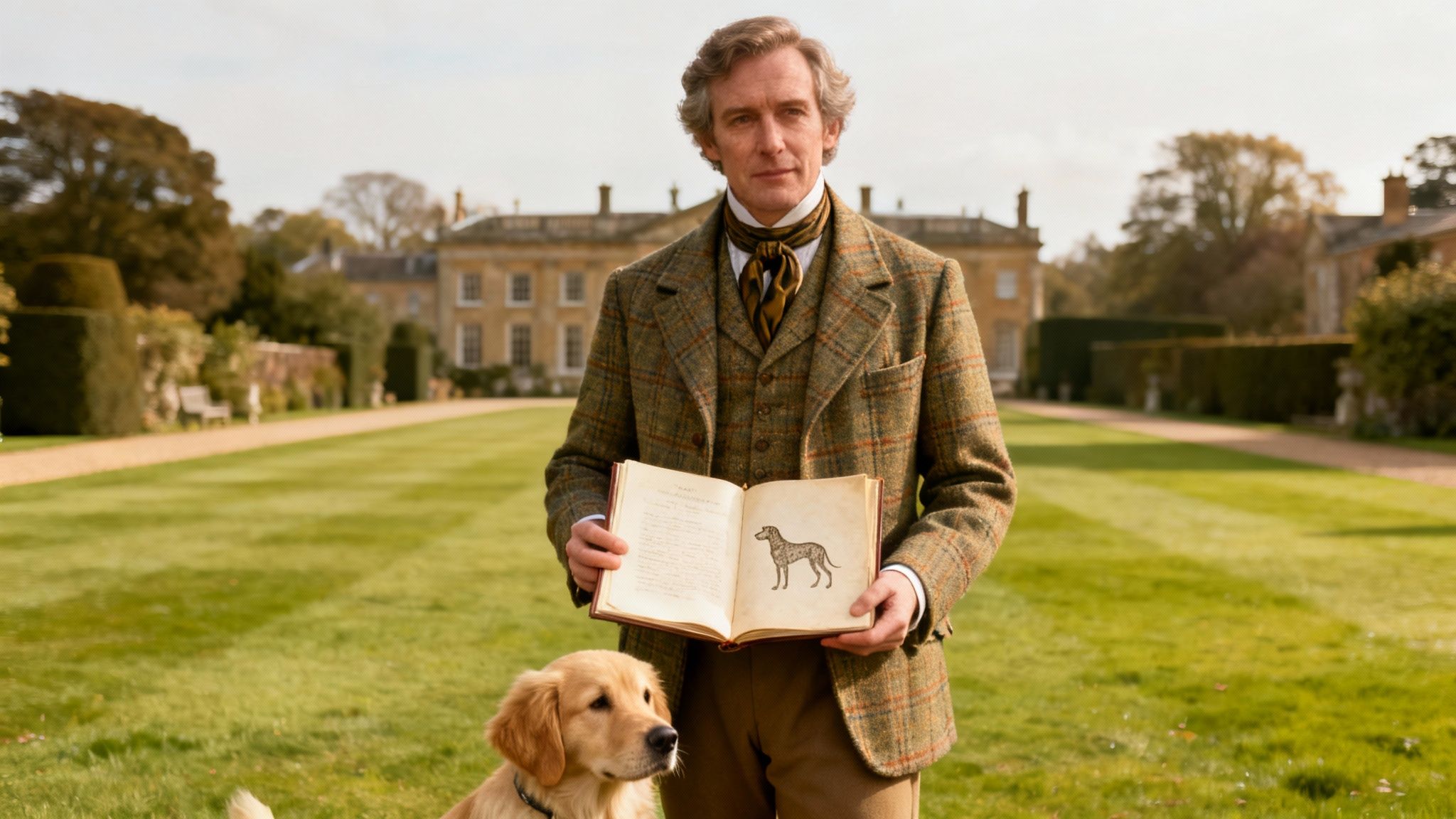
The Golden Retriever’s story is really about the passion and foresight of one man. Dudley Marjoribanks, the first Baron Tweedmouth, was more than a Scottish aristocrat. He was a methodical, forward-thinking breeder with a clear goal in mind.
He pictured the perfect gundog, one perfectly suited for the wet, rugged terrain of the Scottish Highlands. While most retrievers of his day were black, Lord Tweedmouth saw something special in the rarer golden coat. More importantly, he needed a dog that was not only skilled and tough but also exceptionally loyal and gentle.
The Guisachan Estate: A Breed's Cradle
Lord Tweedmouth's sprawling Guisachan Estate in Inverness-shire became the laboratory for his breeding program. This landscape of hills, moors, and chilly lochs was the ultimate proving ground. Here, he could test his dogs against the very conditions they were bred to master.
His approach was incredibly modern for the 1860s. While many breeders were starting to focus on looks for the show ring, Lord Tweedmouth put function, temperament, and natural retrieving ability first. He wanted a companion that was as steady in the home as it was effective in the field. This practical mindset is what makes his story so compelling. Think about the care you put into your own Golden’s life, from their diet to their training. Lord Tweedmouth applied that same dedication to shaping an entirely new breed.
Lord Tweedmouth’s vision was crystal clear: create a retriever with a superior nose, a gentle "soft mouth" for carrying game, and an unwavering desire to please. His success is the very reason your Golden instinctively wants to be your best friend.
A Blueprint for Excellence: The Studbook
What truly set Lord Tweedmouth apart was his meticulous record-keeping. He documented every single breeding decision in a detailed studbook from 1865 to 1890. This leather-bound journal became the Golden Retriever's birth certificate, tracing its lineage with undeniable proof.
Now preserved by the UK's Kennel Club, that studbook is more than a historical artifact. It’s a blueprint for excellence that reveals a series of thoughtful decisions, not random pairings, all aimed at cementing specific, desirable traits. So, every time you admire your Golden’s soft expression, you’re seeing the direct result of Lord Tweedmouth’s vision. He didn't just breed a dog; he engineered a devoted family member.
The Original Recipe That Created the Golden Retriever
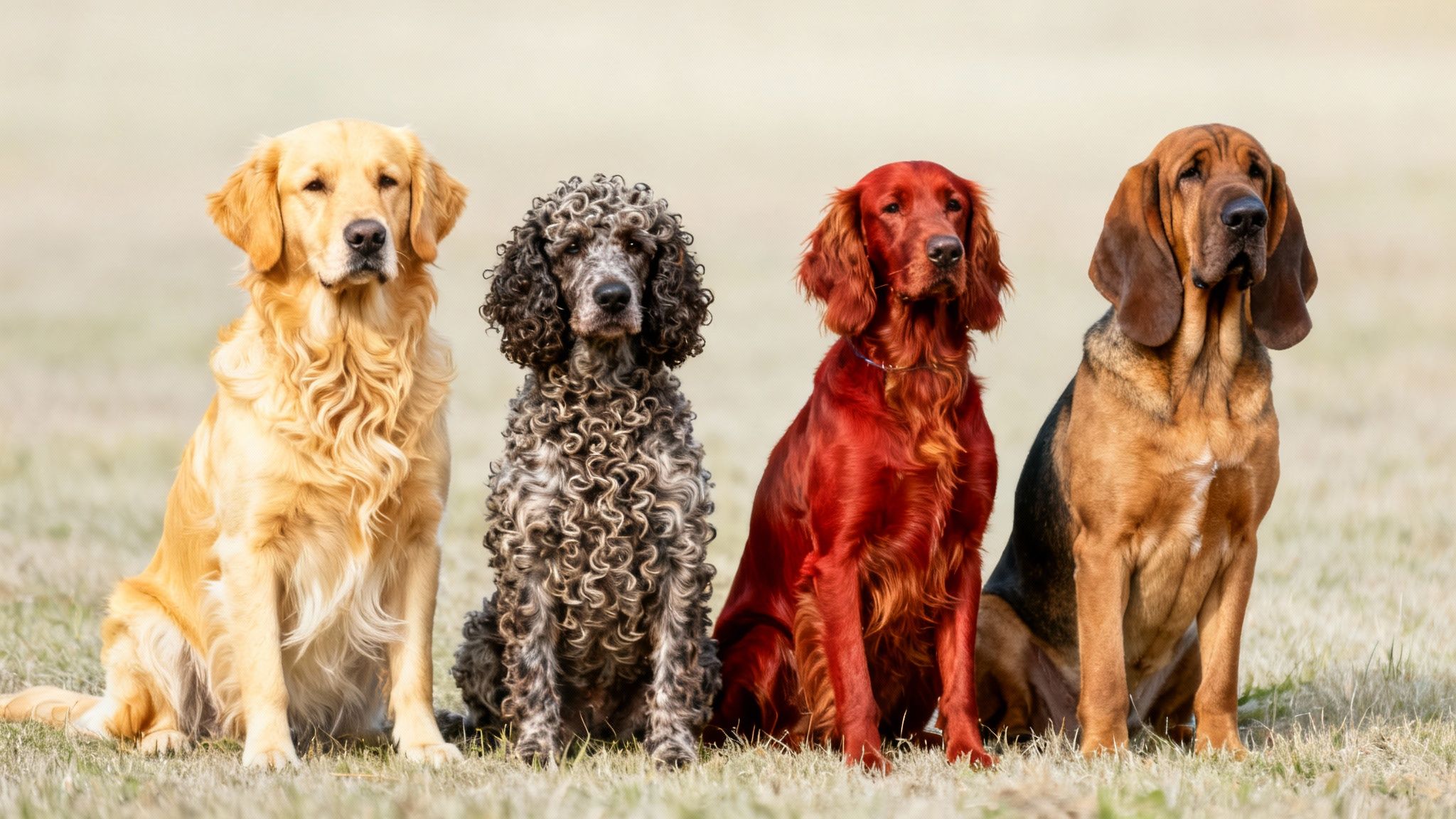
Creating the Golden Retriever was like following a meticulous family recipe, with Lord Tweedmouth as the master chef. He carefully selected "ingredients" to cultivate the exact traits he wanted: gentle, smart, and a master in the field. Thankfully, his records give us a clear window into how our favorite companions came to be.
The process kicked off with one key pairing. It all started with Nous, a striking yellow Wavy-Coated Retriever, and Belle, a tenacious Tweed Water Spaniel. Nous brought the gorgeous golden coat and natural retrieving drive, while Belle contributed a deep love of water and an eager-to-please spirit. Their first litter of yellow puppies was a success, forming the foundation of the new breed. But Lord Tweedmouth wasn't done. The recipe needed a few more tweaks.
Perfecting the Breed with Key Ingredients
Over the next two decades, Lord Tweedmouth methodically introduced other breeds into the lineage. Each one was chosen with a specific goal in mind.
-
Irish Setter: To add a dash of elegance and richer color, he brought in an Irish Setter. This infusion helped deepen the golden coat and added a layer of speed and athleticism.
-
Bloodhound: For a superior nose, a Bloodhound was introduced into the mix. This dramatically improved the breed's tracking ability, a vital skill for finding fallen birds across vast terrain.
These weren't just random pairings. Lord Tweedmouth was patiently sculpting a dog that perfectly balanced a gentle temperament with rugged field capability.
The objective was always clear: to forge a dog that was as skilled in the field as it was loving by the fireside. This thoughtful blend is why your Golden can switch from an intense game of fetch to a soft, cuddly nap in the blink of an eye.
Lord Tweedmouth's breeding program, which ran from the 1860s to the 1880s, was a masterful fusion of the best traits from several breeds. The end result was a dog that perfectly aligns with the breed standard we recognize today, generally standing 20-24 inches tall and weighing 55-75 pounds. This heritage of intelligence and adaptability is precisely why Goldens are so brilliant as service animals and cherished family members. You can dive deeper into the breed's story and traits on DogBuddy’s blog.
How Goldens Journeyed from Scotland to America
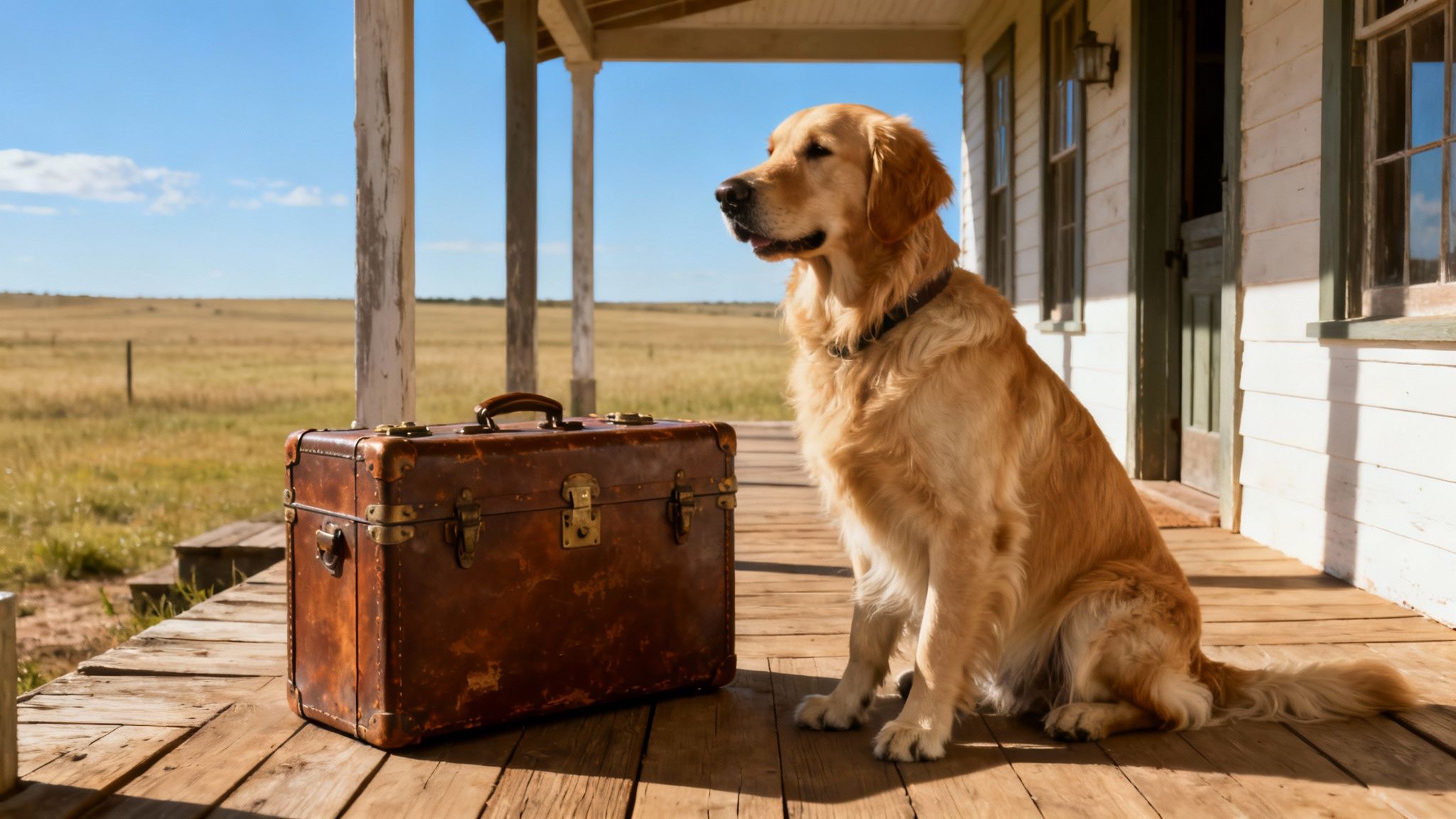
The Golden Retriever’s story was too big to stay confined to the Scottish Highlands. Their journey across the Atlantic is a tale of family connections and new frontiers, charting their course from a specialized gundog to one of America’s most adored companions. And it all started with the founder's own family.
It was Lord Tweedmouth’s son, Archie Marjoribanks, who first carried his father's legacy to North America. Around the 1890s, he introduced the first Goldens to the continent. This marked the beginning of a new chapter for the breed, though their initial job wasn't as a family pet, but as a working dog on a Texas ranch.
From a Texas Ranch to American Hearts
The breed's American story began when Archie brought a male Golden named Sol to his family's Rocking Chair Ranch. Sol’s job was to help herd Angus cattle, proving from the start how intelligent and versatile these dogs were. Though Sol's time there was brief, the seed had been planted.
Archie later brought a female named Lady to Canada. These early introductions set the stage. By the 1920s, more Goldens were being imported, and word spread about their gentle nature and incredible trainability.
The American Kennel Club (AKC) officially recognized the Golden Retriever in 1925. This was a huge milestone, marking their formal entry into the American dog world and paving the way for their future rise.
The breed's foothold in North America grew stronger over the next couple of decades. But it was after World War II that their popularity truly exploded. Soldiers returning home were looking for loyal, steady companions to build their families with, and the Golden Retriever fit that role perfectly. They moved seamlessly from the hunting field to the family room, becoming a symbol of American suburban life.
The Rise of an American Icon
By the 1970s, the Golden Retriever wasn't just another popular dog; it was an American icon. Over time, U.S. breeding programs began to develop a slightly different style, often called the "American" Golden. These dogs tended to have a stockier build and a darker coat compared to their British cousins.
Despite these subtle physical differences, the breed's core temperament, that gentle, loving heart, remained unchanged. Today, Goldens consistently rank among the top breeds in the United States, with over 40,000 registered with the AKC each year. Their journey from a quiet Scottish estate to bustling American homes is a testament to their adaptable spirit. This global story, which you can explore further at Scottish at Heart, shows the universal appeal that makes us want to celebrate our dogs with something special, like a cozy, Golden-themed mug from Golden Prints for a quiet moment with your own furry family member.
Understanding Different Golden Retriever Types
As you get to know Golden Retrievers, you’ll likely hear people talk about "American" and "British" types. It's a common point of confusion: are they different breeds? The short answer is no. They are all one wonderful breed.
Think of it like a family recipe passed down through generations. As Goldens made their homes in different parts of the world, breeders began to favor slightly different traits. Over decades, these subtle preferences, guided by different kennel club standards, created the distinct "styles" we see today. They aren't separate breeds, just different branches of the same family tree.
American vs. British Golden Retrievers
The most obvious differences are in their looks. The American Golden, which you'll see most often in the United States, tends to be a bit leaner and more athletic, with that classic lustrous golden coat we all know and love.
On the other hand, their British cousins, common throughout Europe and Australia, are often built a bit stockier. They typically have a broader, more "blocky" head and a coat that ranges from a rich gold all the way to a pale cream.
And what about the popular "English Cream" Golden Retriever? That's not a separate breed, either. It's simply a name used to describe a British Golden Retriever with a very pale, cream-colored coat. This lighter color is perfectly within the standard set by the British Kennel Club but is a bit too light for the American Kennel Club's show-ring preferences.
American vs. British Golden Retrievers: A Friendly Comparison
While they are the same breed, decades of separate development have led to some subtle but distinct differences between American and British lines. This little cheat sheet can help you tell them apart.
| Characteristic | American Golden Retriever | British Golden Retriever |
|---|---|---|
| Build | Generally leaner and more athletic | Stockier with a heavier bone structure |
| Head | More narrow with a defined stop | Broader and more "blocky" |
| Coat Color | Ranges from light to dark gold | Can be any shade of gold or cream |
| Coat Texture | Typically dense and straight | Often slightly wavier and thicker |
| Tail | Carried with a slight upward curve | Usually carried level with the back |
Of course, these are just general guidelines. At the end of the day, every Golden is an individual whose unique look is a beautiful map of their heritage.
Knowing these differences just adds a fun layer to appreciating your dog’s personal story. For those who are especially fond of the lighter-colored pups, you can even show it off with a personalized English Cream Golden Retriever coffee mug. But whether American or British, stocky or sleek, the loving, intelligent, and joyful spirit is what truly makes a Golden a Golden.
Why Their History Makes Goldens Perfect Family Dogs
Ever watched your Golden Retriever gently mouth a favorite toy or lean in for a comforting cuddle? When you see that, you're witnessing over 150 years of selective breeding in action. The story of the Golden Retriever isn't just trivia; it's the blueprint for the amazing family companion we know and love today.
Their original job demanded patience, focus, and an exceptionally gentle touch. Lord Tweedmouth specifically needed a dog with a "soft mouth," one that could retrieve delicate game birds without leaving a mark. That single trait is why your Golden is so instinctively careful and trustworthy around children.
From a Hunter's Partner to a Family's Heart
The bond between a hunter and a gundog had to be incredibly strong. It was a partnership built on a deep connection and a powerful desire to please. This historical need for cooperation is why your Golden is so trainable and attentive, always looking to you for the next cue.
Lord Tweedmouth didn’t just breed a skilled working dog; he engineered a devoted companion. The foundation of the breed was built on a calm temperament, unwavering loyalty, and a sharp, intelligent mind, all qualities that make them the ultimate family dog.
This rich heritage of purpose and companionship is why we feel such a profound connection to them. We see their history play out in their everyday actions.
- Eagerness to learn: This comes directly from their past, working side-by-side with their human partners.
- Patient nature: A throwback to the long, quiet hours spent waiting for a command in the field.
- Joyful love of fetch: This isn't just a game; it's a direct line to their core instinct to retrieve.
It’s this beautifully crafted history that inspires us to celebrate them. We share our homes and our lives with these incredible dogs, and finding a way to honor that bond feels important. That’s why many owners search for the best gifts for dog owners, looking for something that truly captures that special connection. It's about finding a tribute worthy of their amazing story.
Answering Your Questions About Golden Retriever History
We've traveled from Scottish highlands to American show rings, uncovering the rich story of the Golden Retriever. But you might still have a few questions. Let's clear up some of the most common curiosities about this incredible breed's past.
What Breeds Are in a Golden Retriever?
Think of the Golden Retriever as a masterfully mixed recipe. The original ingredients were a Yellow Wavy-Coated Retriever named Nous and a Tweed Water Spaniel (a breed that no longer exists) named Belle.
Lord Tweedmouth later added a few more key components to perfect his vision. A dash of Irish Setter was brought in to enrich the coat's beautiful red-gold hue, and a bit of Bloodhound was introduced to sharpen their already impressive tracking skills.
Is the Russian Circus Dog Story True?
It's a great tale, but that’s all it is: a tale! For a long time, a popular rumor claimed Goldens descended from a troupe of Russian circus dogs. It was a romantic idea, but it's completely untrue.
Thankfully, we have the receipts. Lord Tweedmouth kept meticulous breeding records, and his original studbook, now preserved by the UK's Kennel Club, lays out the real Scottish history, line by line.
What’s an "English Cream" Golden Retriever?
You’ll often see dogs advertised as "English Cream" or "White" Goldens, but this is more of a marketing term than an official distinction. It's not a separate breed.
This nickname simply refers to a Golden Retriever with a very pale, cream-colored coat that aligns with the British Kennel Club standard, which allows for a broader range of colors than the American standard. They are 100% Golden Retriever, just on the lighter end of the spectrum.
At the end of the day, it doesn't matter if their coat is the color of pale cream or a deep, burnished gold. They are all the same breed, defined by that gentle, intelligent, and famously loving spirit.
Knowing where your Golden comes from makes you appreciate them that much more. Every soft-mouthed retrieve and every loyal lean is a connection to a legacy that’s now over 150 years old. If you're as passionate about this history as we are, you'll love our collection of Golden Retriever gifts. It’s the perfect way to celebrate your four-legged historian.
At Golden Prints, we turn the love for your Golden into something you can wear, use, and share. Check out our collection of thoughtful apparel, home goods, and gifts at https://www.goldenprintsonline.com.


