

A Guide to Print on Towels Your Favorite Golden Retriever Designs
Yes, you can absolutely print on towels, and you have a few great options depending on the towel you're working with. For polyester towels, sublimation is your best friend. For classic cotton, you will want to look at screen printing or heat transfer vinyl (HTV).
The best choice depends on the towel's fabric and how detailed your design is. The good news is that with the right approach, anyone can create some wonderful custom towels at home.
Bringing Your Golden Retriever Designs to Life
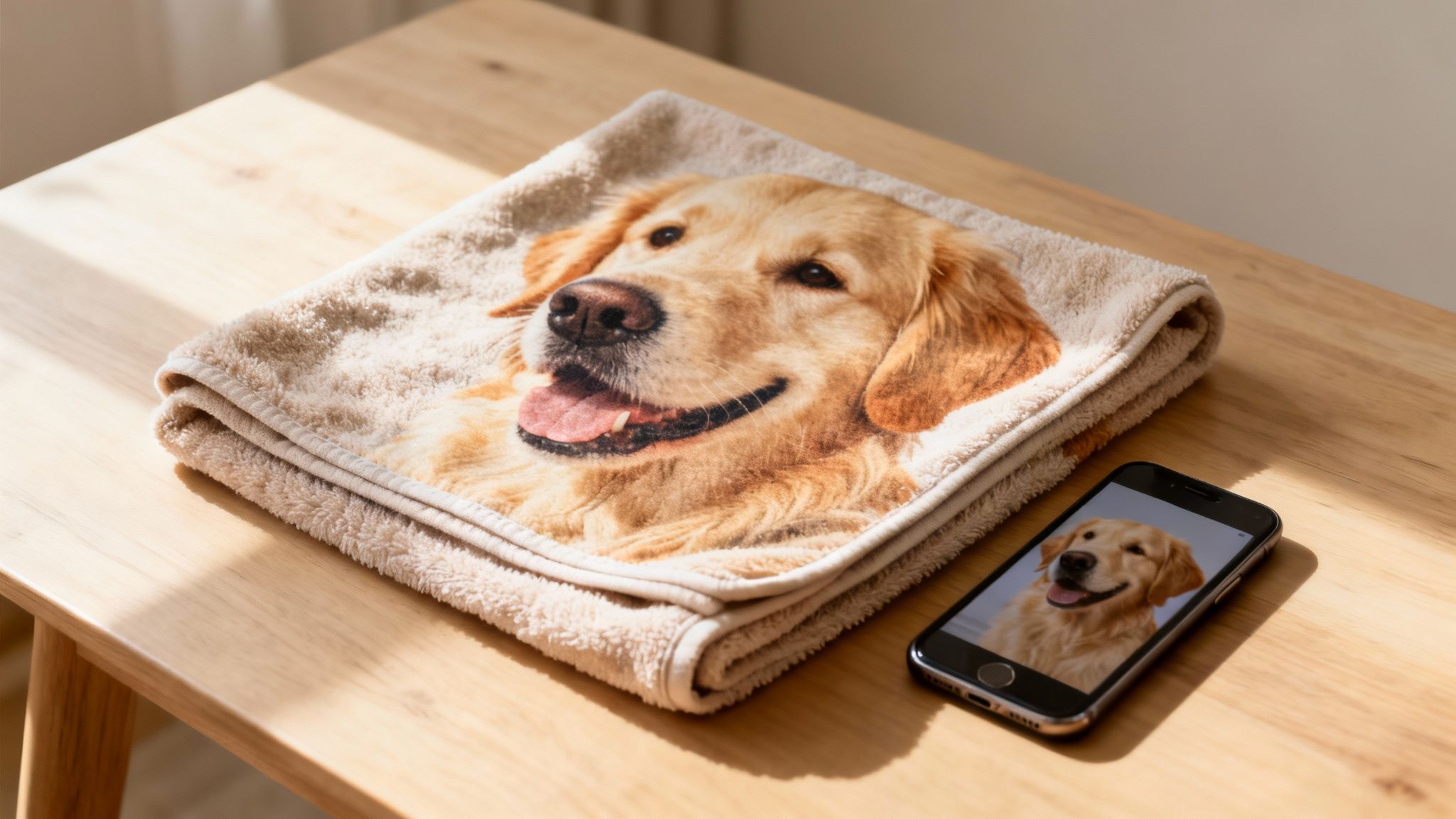
If you own a Golden Retriever, your camera roll is probably overflowing with their goofy grins, muddy paws, and sleepy snuggles. We get it. These dogs are not just pets; they are furry, four-legged family members. So, why not take those moments and turn them into something you can see and use every day?
This guide is for anyone who wants to sprinkle a little more of that Golden Retriever magic into their home. We are talking about creating something with real heart, not just grabbing another generic piece of decor. Imagine drying dishes with a towel that has a quirky illustration of your pup, or a beach towel that shows off their best "I love the water" face.
Why Create a Custom Dog Towel?
Making a custom towel is so much more than a simple craft project. It is about keeping your best friend’s spirit close, even when they are off chasing squirrels in the backyard.
Here are a few reasons why this is such a great idea:
- The Perfect Gift: Know someone who just got a Golden puppy? A towel with their new furball's face on it is a thoughtful, unique present they will actually use and love.
- A Cherished Keepsake: It’s a beautiful way to memorialize a pet who has crossed the rainbow bridge. Turning a favorite photo into a towel can bring back a flood of happy memories every single day.
- Functional Home Decor: Why settle for boring? Add a splash of personality to your kitchen or bathroom with a design that perfectly captures your dog's goofy charm. A towel with a witty saying, like some of the funny Golden Retriever dish towels you can find, adds a daily dose of joy.
In this guide, we will walk you through the whole process of how to print on towels, step-by-step. We will cover everything from picking the right printing method to making sure your design pops and holds up to real-life use. Consider this your roadmap for turning a simple idea into a functional piece of art that celebrates your favorite furry companion. Let's get started.
How to Pick the Best Printing Method for Your Towel
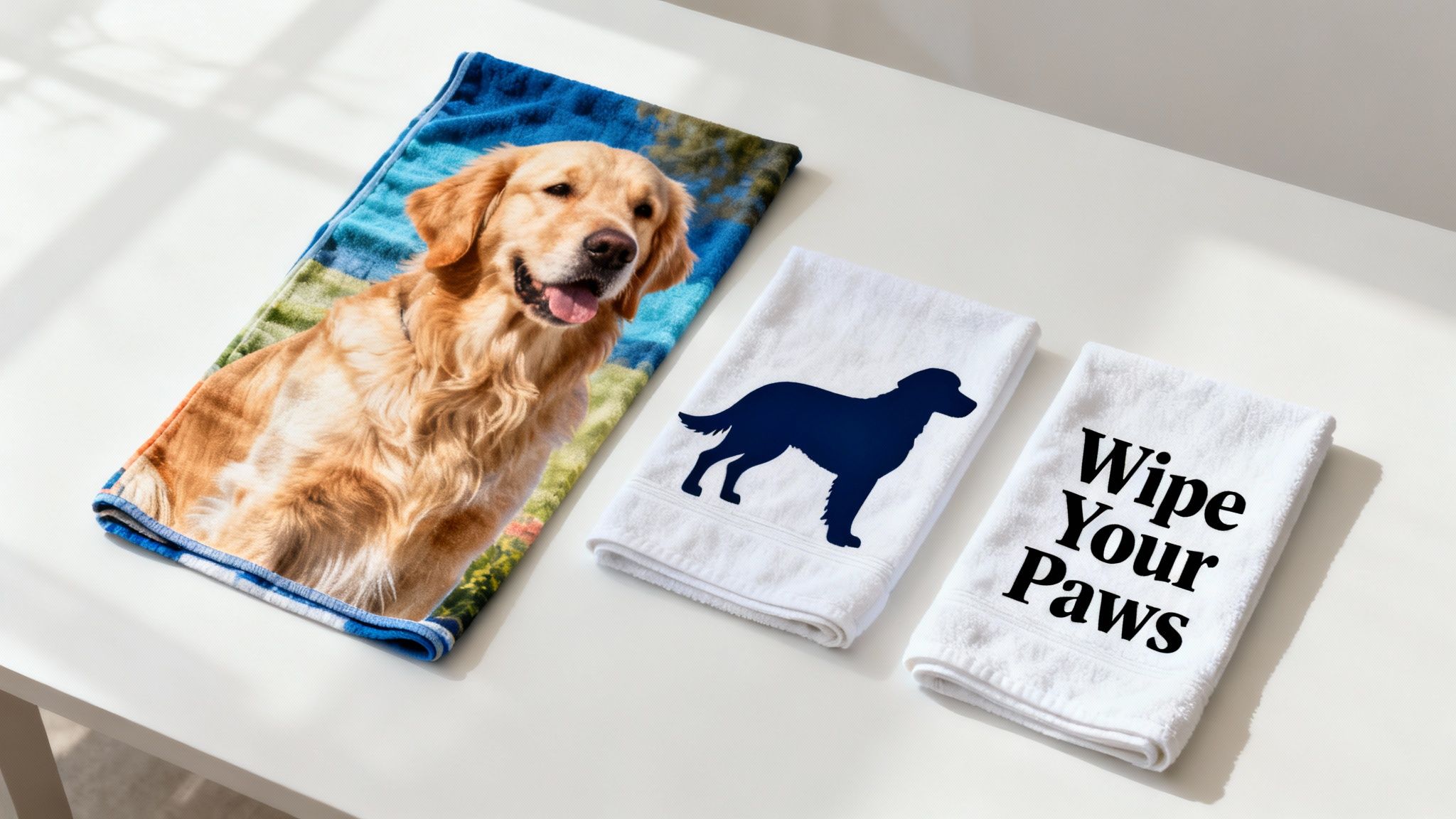
There is no single "best" way to print on towels. The right technique really comes down to your specific project, like what your design is, what kind of towel you are using, and what its job is going to be. It's like picking the right brush for a painting; the tool you choose changes everything.
Let's walk through the most common options so you can find the perfect fit for your Golden Retriever masterpiece. Each one has its own strengths and works best with certain materials.
Sublimation: For Picture-Perfect Detail
If your goal is to capture that perfect, goofy photo of your Golden Retriever on a big beach towel, sublimation printing is what you want. It is a fascinating process where heat turns solid ink into a gas, which then bonds permanently with the fabric fibers.
What you get is a breathtakingly clear, vibrant image that becomes part of the towel itself. It will not crack, peel, or fade, no matter how many times it gets stuffed into a beach bag.
But there is a catch. Sublimation only works its magic on polyester or high-polyester blend fabrics. It is fantastic for those super-soft microfiber towels but will not work on a classic 100% cotton kitchen towel.
Screen Printing: For Classic, Bold Graphics on Cotton
For that timeless, slightly raised feel on a sturdy cotton dish towel, screen printing is the professional's choice. This is the old-school method where ink is pushed through a custom stencil (or screen) onto the fabric.
It creates a thick, opaque layer of color that is incredibly tough. This is the go-to for simpler, bold designs like a funny quote or a clean silhouette of your dog. Because it is so durable, it is perfect for a workhorse towel that will see a lot of use and a lot of washing.
Pro Tip: If you want a design that feels like it is truly part of the fabric and can handle heavy use, screen printing on cotton is tough to beat. It is what gives professionally made products their long-lasting quality.
Heat Transfer Vinyl (HTV): The Go-To for DIY Projects
Looking for a fun weekend project? Heat Transfer Vinyl (HTV) is by far the most accessible way to print on towels at home. All you do is cut your design out of a special vinyl sheet and use a heat press (or even a household iron) to stick it to the fabric.
HTV is perfect for adding names, simple shapes, or fun phrases. Think of a "Wipe Your Paws" towel for the mudroom. While it sits on top of the fabric and does not have the seamless feel of sublimation, it is a fantastic way to create something personal without needing a ton of specialized gear.
For some great ideas, you can find all sorts of amazing Golden Retriever-themed home goods to get your creative juices flowing.
This boom in custom home goods is not just a niche hobby. The global towel market, which includes the very dish towels perfect for custom prints, was valued at USD 17 billion in 2024 and is expected to reach nearly USD 28.7 billion by 2034. It is clear that personalized touches are more popular than ever.
Comparing Towel Printing Methods at a Glance
Still not sure which way to go? This quick comparison should help you find the best printing method for your Golden Retriever towel project.
| Method | Best For | Towel Fabric | Durability | DIY Friendliness |
|---|---|---|---|---|
| Sublimation | Full-color photos, gradients | Polyester or high-poly blends | Excellent (no fading/cracking) | Moderate |
| Screen Printing | Bold graphics, text, logos | Cotton, cotton blends | Excellent (very long-lasting) | Difficult |
| Heat Transfer Vinyl | Names, simple shapes, text | Cotton, polyester, blends | Good (can eventually peel) | Excellent |
Ultimately, whether you're aiming for a professional-grade photo print or a quick and fun custom gift, there's a method that will bring your Golden Retriever design to life.
How to Print Your Own Towels at Home with HTV
Ready to get that happy Golden Retriever face onto a towel? For anyone starting out, Heat Transfer Vinyl (HTV) is one of the most satisfying and straightforward ways to customize towels right at your kitchen table. Think of it as a professional-grade iron-on that is surprisingly durable. This method is perfect for getting crisp text, clean silhouettes, or bold, single-color graphics onto fabric.
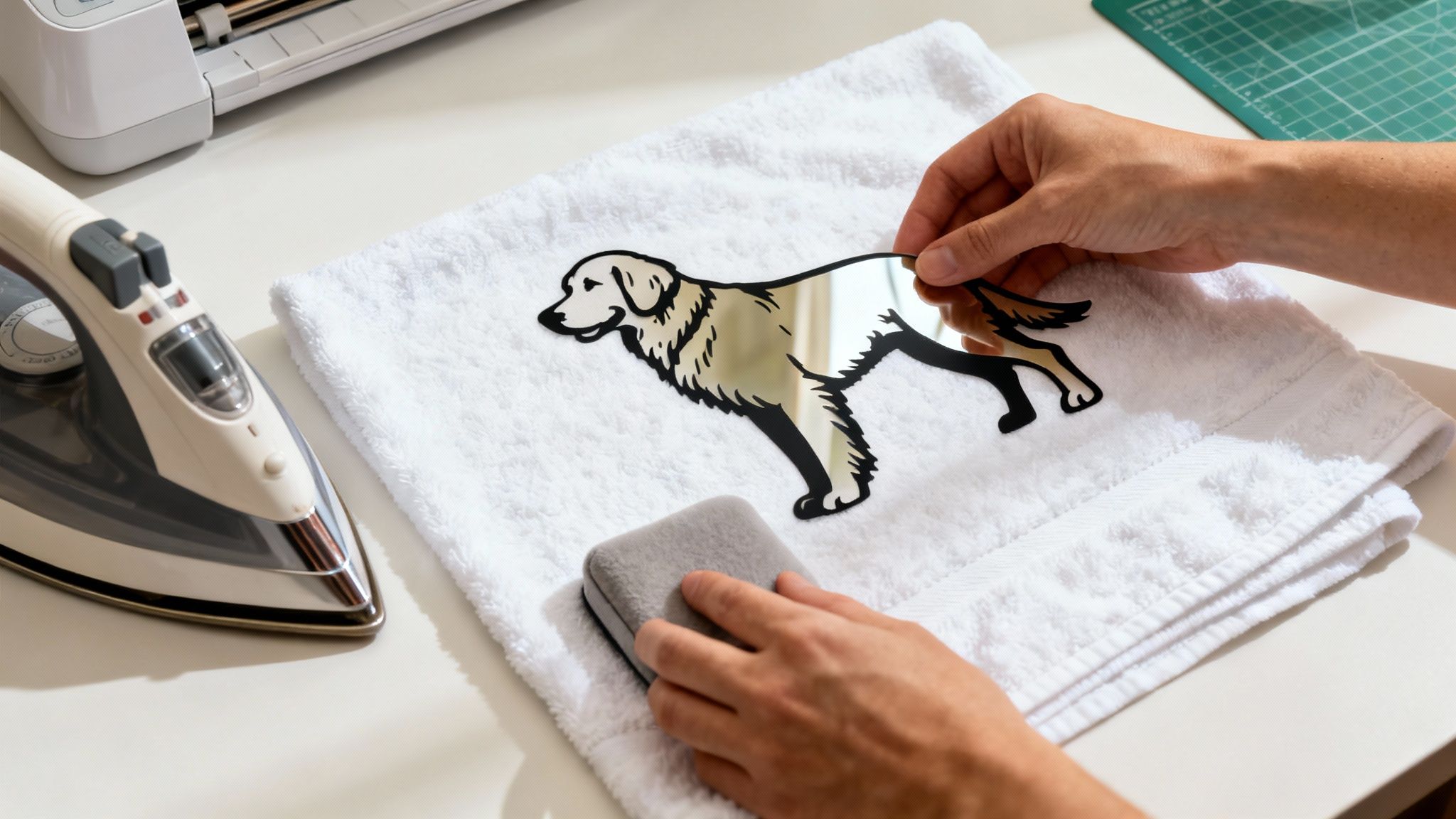
Unlike sublimation, which actually dyes the fabric fibers, HTV creates a layer that sits on top of the material. This gives your design a distinct, slightly raised feel. It’s a great choice for cotton or cotton-blend dish towels, making it incredibly easy to whip up those cute "Wipe Your Paws" towels for the mudroom or a personalized kitchen towel with your dog's name. Honestly, it feels more like a fun weekend craft project than a technical printing job, and the results are instant.
Gathering Your Supplies for the Project
Before you jump in, let's get your workspace set up. Having everything you need within arm's reach makes the whole process go from frustrating to fun. You do not need a fancy studio; just a few key items will do the trick.
Here is a quick checklist to get you going:
- Your Towel: We suggest starting with a flat-weave cotton or cotton-blend dish towel. They're the most forgiving. Terry cloth towels work, but their loopy texture requires a bit more finesse.
- Heat Transfer Vinyl (HTV): Grab a quality brand of smooth HTV. If you are tackling a textured towel, stretch HTV sometimes adheres better because it can flex into the fabric's nooks and crannies.
- A Cutting Machine: A Cricut or Silhouette machine is your best friend here for cutting intricate designs cleanly. For a really simple shape, you could even get away with a craft knife and a steady hand.
- Weeding Tools: These little tools look like dental picks and are non-negotiable for removing the tiny, unwanted bits of vinyl from your cut design.
- Heat Source: A dedicated heat press will give you the most consistent, professional-looking results. That said, a standard household iron absolutely works for your first few projects.
- Teflon Sheet or Parchment Paper: This is a must-have. It protects your iron, your vinyl, and your towel from direct heat, preventing any scorching or melting.
- Pressing Pillow (Optional but Recommended): This is just a heat-resistant foam pad. It is incredibly helpful for distributing pressure evenly, especially when you are working with the bumpy texture of a terry cloth towel.
Preparing and Applying Your Design
Once your supplies are lined up, the real fun starts. The secret to a great HTV project is simply being patient during the prep work. Nearly every mistake I have ever made happened because I rushed the weeding or the transfer.
First, you will either create your own design or download one and load it into your cutting machine's software. Now, here is the golden rule: always mirror the image before you hit "cut." It is the most common mistake beginners make. Since the machine cuts the vinyl from the back, the design has to be flipped to look correct when you press it onto the towel.
Next up is weeding. This is where you will carefully peel away all the "negative space" vinyl, leaving just your beautiful Golden Retriever silhouette or clever phrase on the clear plastic carrier sheet. Take your time, especially with fine details or skinny letters.
A Real-World Tip: When I am weeding a complex design, I place the vinyl sheet on a light pad or even just my tablet screen with a white background. The backlight makes the cut lines pop, so you can easily see every tiny piece you need to remove without squinting.
Finally, it is time to bring it all together. Give your towel a quick press with the iron for a few seconds to get rid of any lingering moisture or wrinkles. Position your design exactly where you want it, cover it with a Teflon sheet, and press firmly with your heat press or iron. Be sure to follow the time and temperature settings recommended by the HTV manufacturer. Consistent pressure and the right temp are what create a bond that lasts.
After pressing, let it cool for a moment (check if it is a "hot peel" or "cold peel" vinyl), then carefully peel back the carrier sheet to reveal your masterpiece.
Creating Designs That Are Pawsitively Perfect
A great custom towel is so much more than just a picture on fabric. It is a chance to really capture the spirit of your Golden Retriever. With a few smart design choices, you can transform a plain old kitchen towel into a cherished keepsake that tells a little story.
Before you even think about style or color, let’s talk about quality. The single most important rule is to start with a high-resolution image. If you pull a blurry, pixelated photo from social media, your final print will look fuzzy and unprofessional. Always use the original, full-size picture straight from your phone or camera for a crisp, clear result that does your beautiful dog justice.
Finding the Right Design Style
Not sure where to start? Think about what makes your dog, your dog. Is your Golden a goofy, boundless ball of energy, a majestic gentle giant, or a professional-level napper? Let that guide you.
- Photo Portraits: You cannot go wrong with a classic. A clean, well-lit headshot is timeless. Just make sure the background is not too cluttered because you want that happy face to be the star of the show.
- Action Shots: A picture of your pup mid-fetch or splashing through the waves can inject a ton of fun and dynamic energy, especially for a beach or bath towel.
- Minimalist Art: Sometimes, less really is more. A simple line art illustration or a clean silhouette of your Golden can look incredibly elegant and modern.
- Playful Patterns: Why settle for one image? A repeating pattern of your dog's face or even just their paw prints creates a charming, one-of-a-kind design.
Getting Creative With Placement and Color
Where you put the design makes a huge impact. A centered graphic is a safe bet, sure, but thinking outside the box can add a really special touch.
Imagine a design where just your Golden's fluffy tail playfully peeks out from the bottom corner of the towel. Or maybe their name is elegantly printed along the bottom hem. For a more subtle approach, a small, beautifully detailed portrait in one corner can feel like a signature piece of art.
A Little Advice: The goal is to create a balanced, visually pleasing composition. A well-placed design elevates the towel from a simple utility item into a piece of decor.
The colors you choose are just as crucial. If you are printing on a white towel, your options are pretty much wide open. For colored towels, however, you need to think about contrast. Pick colors that will stand out against the background fabric. A golden-yellow design, for instance, might get lost on a beige towel, but it will pop beautifully on dark gray or navy. This principle of simple elegance is exactly what makes something like a Golden-approved tea towel work so well.
There is a huge market for customizable home goods like these. In fact, the tissue and towel market was valued at a whopping USD 52.93 billion in 2024, which just goes to show how much we all love adding these personal touches to our spaces. If you want to dive deeper into the market trends, Coherent Market Insights has some great data.
By focusing on these small but important details, you will be ready to print on towels like you have been doing it for years.
Caring for Your Custom Printed Towels so They Last
You have put in the work to create the perfect Golden Retriever towel, so you definitely want that happy, goofy face to look great for years to come. The secret to making that happen is all in the aftercare. Thankfully, it is not complicated at all. A few small tweaks to your laundry day will keep both the print and the towel in top shape.
The golden rule is to be gentle. High heat and harsh chemicals are the mortal enemies of any custom print, regardless of the method you used. Whether it is heat transfer vinyl, sublimation, or another method, these simple tips will make a huge difference in how long your design holds up.
Washing Your Custom Towel
That very first wash is crucial. Always give your new creation at least 24 hours to sit before it goes anywhere near the washing machine. This gives the ink or vinyl adhesive time to fully cure and really grab onto the fabric fibers.
Once it is ready, just follow these simple guidelines every time you wash it:
- Go Cold: Stick with cold water on a gentle cycle. Hot water is a fast way to make HTV adhesive fail or cause sublimation inks to fade or bleed.
- Mild Detergent Only: Ditch the heavy-duty detergents with bleach or aggressive stain removers. A simple, mild detergent will get the job done without damaging the print.
- No Fabric Softener: This is a big one. Fabric softeners and dryer sheets leave behind residues that can break down the design's adhesive or coat the print, making it look dull over time.
Here is a pro tip from experience: wash your custom towels with other soft items. Throwing them in with a pair of jeans with a sharp zipper is a great way to snag the towel loops or scratch up your beautiful design.
Drying for Maximum Durability
How you dry your towel matters just as much as how you wash it. The intense heat from a standard dryer cycle is probably the number one cause of cracked, peeling, and faded designs.
The absolute best approach is to tumble dry on the lowest heat setting possible. Even better? Let it air dry. Hanging your towel on a line or a drying rack not only protects the print but also helps maintain the towel’s natural absorbency, keeping it soft and useful.
Taking these extra little steps ensures your towel stays a vibrant, well-loved item for a long time. It is this focus on quality and longevity that makes cotton the undisputed king of bath towels. That is a massive market. The global bath towel industry reached USD 11.3 billion in 2024, and cotton's share alone was USD 6.5 billion, all thanks to its comfort and durability. If you're curious about the numbers, you can dive deeper into this bath towel industry analysis.
Got Questions About Printing on Towels? We've Got Answers.
Jumping into a custom towel project is exciting, but it is totally normal to have a few questions before you get started. After all, getting the details right is what turns a good idea into a great finished product. Let's tackle some of the most common things we hear from fellow creators.
What's the Best Towel Material to Print On?
This is a great question, and the answer really hinges on the printing method you have chosen. Each technique has its own favorite type of fabric.
-
Sublimation: For this, you absolutely need 100% polyester or a blend with a super high poly count. Sublimation ink turns into a gas under heat and bonds directly with synthetic fibers. That is how you get those incredible, vibrant photos that will not crack or fade.
-
HTV, Screen Printing, or DTF: You cannot go wrong with classic 100% cotton. It offers a fantastic surface for inks and adhesives to grip onto, making it a reliable choice for designs on kitchen towels or hand towels that need to be durable.
Whatever you choose, look for a towel with a lower pile or a flatter weave. A really thick, shaggy towel can be a challenge because the texture can break up the design, making it hard to get that clean, crisp look you are after.
Can I Just Use My Regular Iron for HTV on a Towel?
Yes, you can definitely use a standard household iron for your heat transfer vinyl (HTV) project. It is how many of us get our start without buying a bunch of new equipment. Just know that it takes a little more finesse and patience compared to a heat press.
A little advice from my own experience: Ditch the wobbly ironing board. Instead, work on a hard, flat, heat-safe surface like a countertop with a protective mat. This lets you apply the solid, even pressure that HTV needs to properly fuse with the fabric fibers for a bond that lasts.
Also, be sure to turn the steam function off. Press down firmly on each part of your design for the specified time, and slightly overlap each section as you move the iron. A heat press makes this all automatic, but with a bit of extra attention, your iron can produce amazing results.
How Can I Keep My Design from Cracking or Peeling?
Making sure your Golden Retriever design stays put comes down to two things: a solid application process and smart care afterward. Nail both, and your towel will look great for years.
First, the application. Follow the instructions for your specific material to the letter. This means hitting the right temperature, pressure, and time. Not enough heat, and the adhesive will not bond properly. Too much, and you can burn the adhesive or the towel itself.
Second is how you care for it. Here is the golden rule: wait at least 24 hours after pressing before you even think about washing it. When you do, use cold water on a gentle cycle. Stay away from harsh detergents, bleach, and fabric softeners, as they can break down the adhesive. To dry, tumble dry on low heat, or even better, just hang it up to air dry. The high heat from a dryer is the biggest enemy of a custom-printed design.
Ready to find the perfect, professionally printed piece that celebrates your furry family member without the DIY fuss? At Golden Prints, we pour our love for Golden Retrievers into every design, creating home goods and gifts that feel personal and true. Explore our collection of thoughtfully crafted items at https://www.goldenprintsonline.com.


