

How to Soften T-Shirts So They Feel Perfectly Worn-In
To get that perfectly lived-in feel from a brand-new t-shirt, you don't need fancy products. Simple household staples like salt, vinegar, or baking soda can work wonders. The trick is to give the shirt a good pre-treatment before its first real wash. Combine that with some smart laundering, think cold water and low-heat drying, and you can break down those stiff fabric finishes right away.
The Secret to That Perfectly Soft Favorite Tee
We all have one. That go-to t-shirt that feels like a hug at the end of a long day spent walking the dog or just relaxing at home. Maybe it's an old crewneck with a faded graphic of a sleepy puppy that just seems to get softer every time you pull it out of the drawer. The comfort isn’t just about the design; it’s the way the fabric feels against your skin.

New shirts, on the other hand, often feel stiff and almost formal. That's usually because of "sizing," a starchy chemical finish applied during manufacturing to make the fabric easier to handle and cut. It’s a necessary part of the process, but it leaves the shirt feeling rigid and far from cozy.
Why Bother Softening Your T-Shirts?
This guide is for anyone who wants to turn a new shirt into that cherished favorite from the very first wear. It's about more than just comfort; it’s about making a piece of clothing feel like it’s truly yours. Breaking in a new shirt is a bit like welcoming a new Golden Retriever into your home. It takes a little effort upfront, but the bond you create is worth it.
We’re going to walk through some simple, practical methods to soften any t-shirt using techniques that are easy to do at home. The goal here is to:
- Preserve the fabric’s integrity so your shirts last for years of adventures.
- Protect printed graphics from cracking, peeling, or fading.
- Create a lasting softness that actually improves with every wash.
This way, your favorite tees will be ready for countless dog park visits and lazy afternoons on the couch. You're not just wearing a shirt; you're wearing a feeling. And you’re not alone in wanting that. The global fabric softener market was valued at around USD 21.9 billion in 2023 and is expected to hit USD 32.1 billion by 2030. Clearly, people want clothes that feel great and are easy to care for.
A well-loved t-shirt is more than just clothing; it’s a wearable memory. Taking the time to soften it properly ensures it’s ready to be part of your story from the moment you put it on.
Whether you're breaking in a cozy new find from our unisex apparel collection or trying to revive an old favorite, these techniques will help you get that perfect, buttery-soft feel every single time. Let’s dive in.
Using Natural Solutions to Soften T-Shirts
Before you reach for a bottle of commercial fabric softener, take a look in your kitchen pantry. You might be surprised to find that some of the best tools for softening a stiff, new t-shirt are already there. These common household items work wonders by gently breaking down the sizing, that slightly stiff coating, that manufacturers put on new clothes.
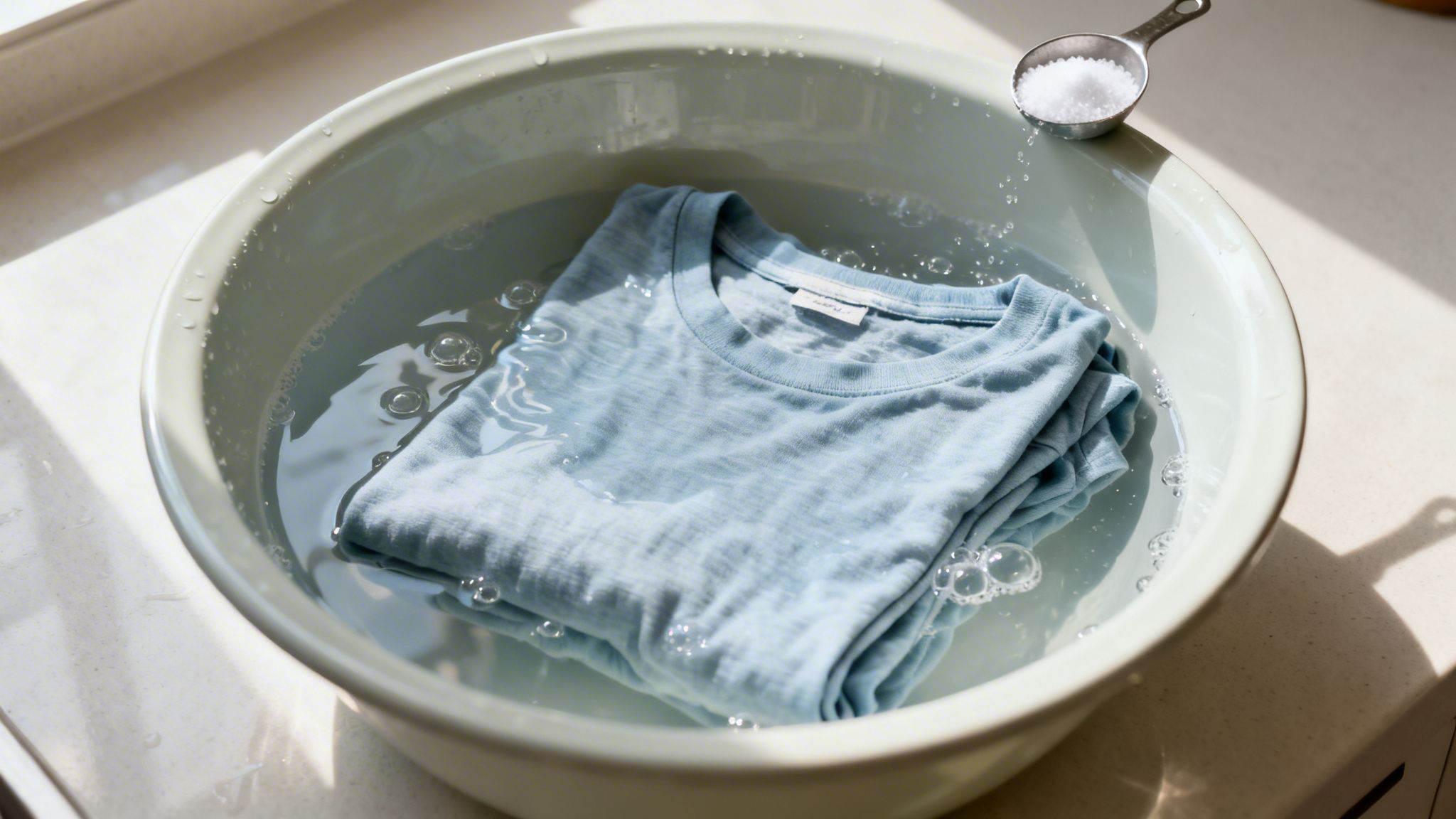
These natural methods are ideal for your new Golden Prints apparel. Why? Because they’re strong enough to relax the cotton fibers but gentle enough to keep those playful graphics looking perfect. It’s a simple, kind recipe for an incredibly comfortable shirt, ready for all the cuddles.
The Simple Salt Brine Method
A salt soak is one of the oldest tricks in the book for a reason: it’s incredibly effective. The salt acts as a very mild abrasive, gently scrubbing away those stiff sizing agents without damaging the actual cotton fibers.
It’s an easy process:
- Mix the Brine: Get a bucket or basin and dissolve about a half cup of plain table salt in one quart of warm water. Just stir until it’s all dissolved.
- Soak the Shirt: Fully submerge your t-shirt in the salt water. For the best results, let it soak for up to three days. If you’re short on time, even a single overnight soak will make a noticeable difference.
- Wash It Out: After its bath, wring out the excess water and toss the shirt right into the washing machine. Run a normal cycle with just a little bit of your usual detergent.
This is a fantastic first move for breaking in a new shirt. The result is a tee that feels much less rigid, almost like it’s been a favorite for years.
Using White Vinegar for Softness
If waiting three days isn't in the cards, a white vinegar soak is a much quicker but just as potent alternative. The acetic acid in vinegar is a champ at dissolving sizing. It also works as a natural fabric softener, leaving the fibers feeling relaxed and supple.
The steps are a lot like the salt brine method, just faster.
- In a basin, mix one part white vinegar with four parts warm water.
- Submerge your tee and let it hang out for at least an hour, though an overnight soak is great if you can swing it.
- Once it’s done soaking, wring it out and wash it as you normally would. And don’t worry about the smell! It washes out completely, leaving behind only softness.
The real magic here is that both salt and vinegar work by removing external finishes, not by coating the fibers the way commercial softeners do. This means you’re getting a genuine, lasting softness that won’t cause buildup or trap odors over time.
The Baking Soda Boost in Your Wash
For a gentler, ongoing approach, getting into the habit of adding baking soda to your wash is a game-changer. Baking soda helps regulate the water’s pH level, which stops mineral deposits from building up and making your clothes feel stiff.
Just add a half cup of baking soda to your washing machine along with your regular detergent. It acts as a natural cleanser and softener, making it an excellent maintenance routine for all your t-shirts, not just the new ones. It’s perfect for keeping those graphic tees bright and soft, ready for countless cuddles with your furry best friend.
Comparing Natural T-Shirt Softening Methods
Not sure which kitchen-pantry-turned-laundry-hack is right for you? This quick table breaks down the three methods to help you choose the best one for your shirt and your schedule.
| Method | Best For | Effort Level | Key Benefit |
|---|---|---|---|
| Salt Brine Soak | New, very stiff 100% cotton shirts. | Low (but time-consuming) | Deeply breaks down tough sizing for a "worn-in" feel. |
| Vinegar Soak | Quick softening for cotton and blends. | Low | Fast results; naturally softens and removes odors. |
| Baking Soda Wash | Gentle, ongoing maintenance for all fabrics. | Very Low | Prevents stiffness and brightens colors over time. |
Each of these methods offers a unique advantage, from the deep-softening power of salt to the everyday convenience of baking soda. The best choice really just depends on how stiff your shirt is and how much time you have.
Mastering Your Laundry Routine for Lasting Softness
Getting that perfectly soft, lived-in feel from a t-shirt isn't a one-and-done deal. It's really about building a smart, gentle laundry routine that keeps softening your tees with every single wash. The right habits can make a massive difference, turning your whole collection of shirts into those go-to favorites you always reach for.

This is especially true for the clothes we really care about. We all want our favorite pieces to last, and this trend is showing up in consumer habits worldwide. Just look at the fabric softener market; the Asia Pacific region alone made up 38.3% of global revenue in 2023. This isn't just about buying soap; it’s about people wanting to preserve the clothes they love, like a treasured crewneck with a perfect Golden Retriever on it.
The Surprising Impact of Using Less Detergent
It feels wrong to say, but one of the best things you can do for your t-shirts is to actually use less laundry detergent. Going overboard with soap is a super common mistake, and it's a fast track to stiff, scratchy fabrics. When you use too much, the rinse cycle can't get it all out, leaving behind a residue that builds up on the fibers over time.
Think of it like washing your dog's fur. If you don't rinse out all the shampoo, their coat feels dull and sticky. The exact same thing happens to your t-shirts. That soap buildup makes the fabric less absorbent and gives it a stiff texture that's the opposite of what you’re aiming for.
Key Takeaway: Try cutting back on your detergent by about a third of the recommended amount. Your clothes will still get perfectly clean, but you'll avoid the residue that makes them feel stiff and unwelcoming.
This simple tweak helps every piece in your wardrobe, from a basic cotton tee to a cozy fleece sweatshirt like the "My Heart Belongs to a Golden" crewneck, stay soft and comfortable. It's a thoughtful touch for a gift that will be loved for a long time.
Optimizing Your Washer and Dryer Settings
The settings on your appliances are powerful tools in your quest for softness. A few small adjustments can protect your clothes and make them feel better and better over time.
For the Washing Machine:
- Choose Cold Water: I almost always recommend a cold water wash. Hot water is just too harsh on cotton fibers; it can cause them to shrink and tighten up, which leads to stiffness. Cold water is much gentler, preserving the fabric and protecting any printed graphics from fading or cracking.
- Select a Gentle Cycle: Unless your clothes are caked in mud from a rainy day at the dog park, the gentle or delicate cycle is all you need. Less agitation means less stress on the fabric's seams and fibers.
For the Dryer:
- Lower the Heat: High heat is the sworn enemy of a soft t-shirt. It essentially "bakes" the fibers, making them brittle and stiff. Tumble dry on a low or medium heat setting instead. Even better, pull your shirts out when they are still just a little damp and let them air dry the rest of the way.
- Add Wool Dryer Balls: Ditch the dryer sheets and grab a set of wool dryer balls. They're a fantastic, natural alternative that softens fabrics by tumbling against them, creating space for air to circulate more efficiently. Not only do they reduce static, but they can also cut down your drying time. A win-win.
Caring for Different T-Shirt Fabrics and Graphics
Not all t-shirts are made the same. The secret to getting that perfectly soft, lived-in feel often comes down to knowing what your shirt is actually made of. What works wonders on a brand-new, stiff 100% cotton tee might not be right for a delicate poly-blend or that amazing vintage find you just scored. A little know-how goes a long way.
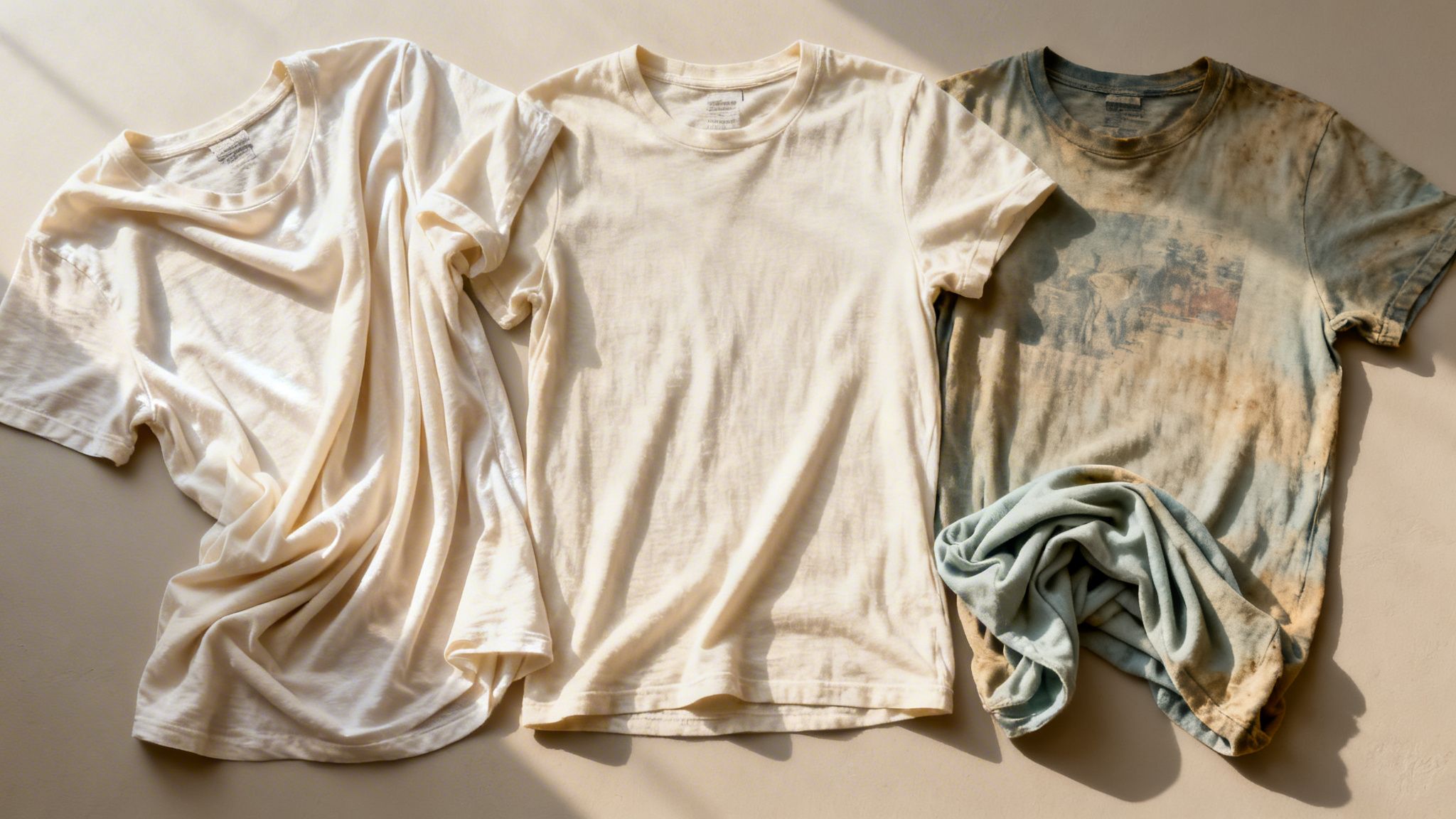
This is especially true when you've got a shirt with a graphic you absolutely love. You want the fabric to be soft, but not at the expense of ruining that cool design. It’s all about balance.
Protecting Your Graphic Tees
Graphic tees need a bit more TLC to keep the print from cracking, peeling, or fading into a shadow of its former self. Think of it this way: the goal is to be gentle, especially with a design that captures your heart, like one that reminds you of your four-legged family member.
Here are my non-negotiable rules for washing graphic tees:
- Always turn it inside out. This is the single most effective thing you can do. It puts a layer of fabric between the print and the harsh world of your washing machine drum.
- Wash with similar textures. Tossing your favorite tee in with zippered jeans or rough towels is a recipe for disaster. That constant rubbing is what destroys prints. Stick to washing it with other t-shirts or soft fabrics.
- Stick to cold water and low heat. Heat is the ultimate enemy of most screen prints. Hot water can degrade the adhesive, while a hot dryer can cause the fabric to shrink, stretching and stressing the graphic.
Following these simple steps will keep your shirt art, like this awesome Golden Retriever Line Art T-Shirt, looking sharp for years to come. It's a perfect gift for the minimalist dog lover in your life.
Tips for Different Fabric Types
Once you know what you're working with, picking the right softening method is a breeze. Here’s a quick rundown on the most common t-shirt materials.
100% Cotton This is the workhorse of the t-shirt world and, thankfully, the easiest to soften. Cotton is a natural fiber that responds really well to treatments like salt or vinegar soaks. These methods are great at breaking down the stiff chemicals from the factory without damaging the fabric itself.
Cotton/Polyester Blends Blends are popular because they're durable and don't shrink as much, but their synthetic side can sometimes lead to pilling. For these, your best bet is to focus on a smart laundry routine. Use a little less detergent, always opt for cold water, and throw in some wool dryer balls to gently pummel the fabric into softness without roughing it up.
Vintage or Thrifted Tees That incredible band tee you found at the thrift store might feel a bit stiff after sitting in storage for a decade. The key here is to be extra gentle. The fibers are older and more fragile. A quick, diluted vinegar soak is a great choice, but I’d recommend letting it air dry to avoid any unnecessary stress from the heat of a dryer.
It's worth noting that more and more people are looking for gentler, more sustainable ways to care for their clothes. The market for eco-friendly and plant-based laundry products is growing much faster than the market for conventional detergents. We're all looking for solutions that are effective but also kinder to our fabrics and the planet.
Need a Softer Shirt Right Now? Here’s What to Do (And What to Avoid)
Let’s be real, sometimes you don’t have time for a multi-day salt soak. You’ve got a last-minute invite, or you just brought home a new tee you’re dying to wear. When you need a quick softness boost, there are a few tricks up my sleeve.
My favorite shortcut is the dryer trick. Grab that stiff t-shirt, toss it in the dryer with a slightly damp washcloth, and add a few wool dryer balls. Run it on a low-heat or air-fluff cycle for about 15 to 20 minutes. The combination of gentle warmth, a little moisture, and the tumbling action of the dryer balls works wonders to relax the fabric fibers in a hurry. It’s not the same as a deep, long-term softening treatment, but it’s a lifesaver in a pinch.
Common Softening Mistakes You'll Want to Sidestep
Knowing what not to do is just as crucial as knowing what to do. Learning how to get that perfect lived-in feel is often about avoiding the common traps that can actually make your shirts feel worse. Steering clear of these missteps will protect your tees and keep them genuinely comfortable.
Here are a few of the most frequent mistakes I see:
- Going Overboard with Fabric Softener: It sounds backward, but using too much commercial softener is a huge mistake. These products work by coating fibers in a waxy, chemical film. Over time, that buildup makes fabric less absorbent, traps odors, and can even leave your shirts feeling stiff or greasy. A splash of white vinegar in the rinse cycle is a far better bet for long-term softness.
- Washing Tees with Rough Items: Tossing your favorite graphic tee in with a load of heavy jeans, zippered hoodies, or abrasive towels is asking for trouble. All that friction leads to pilling and physically breaks down the cotton fibers, leaving them feeling rough. I always make a point to wash my t-shirts with other soft, lightweight clothes.
- Blasting Your Clothes with Heat: I know I’ve said it before, but it’s worth repeating because it's the number one enemy of softness. High heat in both the washer and dryer literally "cooks" the cotton fibers, making them brittle and stiff. Stick with cold water washes and low-heat drying to keep them relaxed and supple.
Think of it like this: You wouldn't use harsh chemicals or a wire brush on your dog's coat, right? Your clothes deserve that same gentle, thoughtful approach to stay in their best shape.
Once you get the "why" behind these tips, you're not just blindly following a guide; you're developing a better instinct for laundry. This is how you keep every shirt in your closet, from brand new to vintage, feeling exactly how it should: soft, comfortable, and ready to go.
Answering Your Top Questions About Softening T-Shirts
Even with the best tips, a few questions always come up when you're trying to achieve that perfectly broken-in feel. It's a common part of the process, so let's tackle some of the most frequent ones we hear from our community of fellow dog lovers.
How Many Washes Does It Take to Soften a New T-Shirt?
There isn't a single magic number, but the good news is you can seriously speed things up. A single pre-wear treatment, like the salt or vinegar soak we talked about, makes a world of difference right out of the gate. That first step is key because it starts breaking down the stiff "sizing" chemicals applied at the factory.
You'll feel a major improvement after just one treatment and wash. For those extra-stiff shirts, it might take another two or three regular wash cycles using smart habits, like cold water and wool dryer balls, to get it just right. The whole idea is to relax the fabric's fibers, and these tricks get you there much faster than just washing it over and over.
Will These Methods Damage the Graphic on My Shirt?
This is a fantastic question, especially when you've got a design you absolutely love. We specifically chose natural methods like vinegar and salt because they are much gentler on printed graphics than harsh chemical treatments.
The golden rules for protecting graphics are simple but crucial: Always wash the shirt inside out, stick to cold water, and steer clear of high heat in the dryer. Tumble drying on low is okay, but air drying is the absolute safest bet for keeping those designs looking crisp and vibrant.
Is Using Fabric Softener Bad for T-Shirts?
It's not that it's "bad," but it works in a completely different way. Most commercial fabric softeners don't actually soften the fibers; they coat them with a waxy, chemical film to create a slick, soft-to-the-touch feeling.
Over time, that coating builds up. This can make the fabric less breathable and reduce its ability to absorb moisture, definitely not what you want on a warm day at the dog park. It can even trap odors. The methods we've outlined here soften the cotton fibers themselves, leading to a genuine, breathable softness that lasts, with no gunky residue left behind.
At Golden Prints, we design our apparel to be part of your daily adventures, ready for every walk, cuddle, and memory you make. Explore our collection of cozy, dog-inspired tees and crewnecks that only get better with time. Find your next favorite shirt at Golden Prints Online.


