

How to Soften a T-Shirt: Get That Perfectly Lived-In Feel
You can soften a brand-new T-shirt with a simple kitchen staple like salt or vinegar, which helps break down the stiff chemicals left over from manufacturing. If you prefer a more hands-off method, just washing and tumble drying it a few times with some wool dryer balls will do the trick, giving it that perfect, lived-in feel you're after.
Why Your New T-Shirt Feels So Stiff
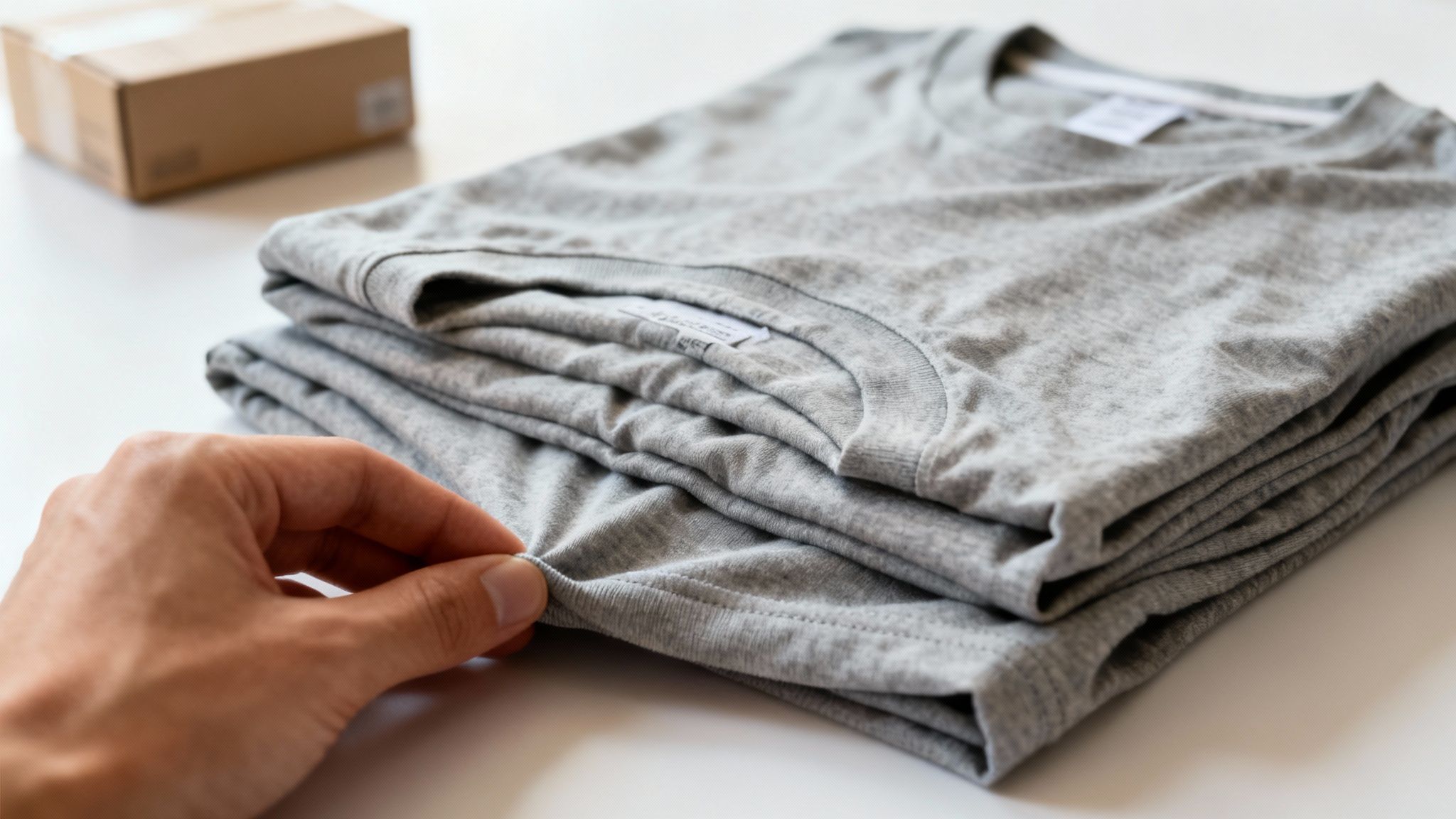
You just opened the package for your new Golden Prints tee, already picturing how cozy it will be for a lazy afternoon with your favorite furry family member. But when you touch it, the fabric feels surprisingly crisp, maybe even a little rigid. Don't worry, that's completely normal and actually a good sign.
That initial stiffness comes from harmless starches and sizing agents that manufacturers apply during production. These substances help the T-shirt keep its shape and prevent wrinkles while it is being shipped, making sure it looks perfect when it arrives. Think of it as a temporary protective coating for the fabric and that awesome Golden Retriever graphic you fell in love with.
It All Starts in Production
Honestly, this crispness is the hallmark of a quality, unwashed garment. It means the fibers are fresh and have not been broken down yet. This brand-new state is a blank canvas, just waiting for you to transform it into your go-to comfy shirt for dog walks and couch cuddles.
The global T-shirt market is huge, so manufacturers have this process down to a science to deliver pristine products worldwide. Learning how to soften these new shirts not only makes them more comfortable but also helps them last longer, keeping that Golden-themed print looking great through countless adventures.
The Journey to Softness
Once you realize why your shirt starts out stiff, the path to softness makes perfect sense. You are not fixing a problem; you are just finishing the process that started at the factory. The goal is to gently wash away those sizing agents to unlock the natural softness of the cotton fibers hidden underneath.
Here is the bottom line before you get started:
- It’s Temporary: That stiffness is designed to wash right out.
- It’s a Sign of Quality: A crisp new shirt means it's fresh from the maker.
- Softening is Easy: You do not need any fancy products, just simple, gentle methods.
With a little care, that new tee will soon have the perfect broken-in feel. It will be ideal for everything from morning walks with your dog to evening cuddles on the sofa. As a brand founded by dog lovers, we know that comfort is everything when it comes to enjoying those special moments.
7 Natural Home Remedies for Softer T-Shirts
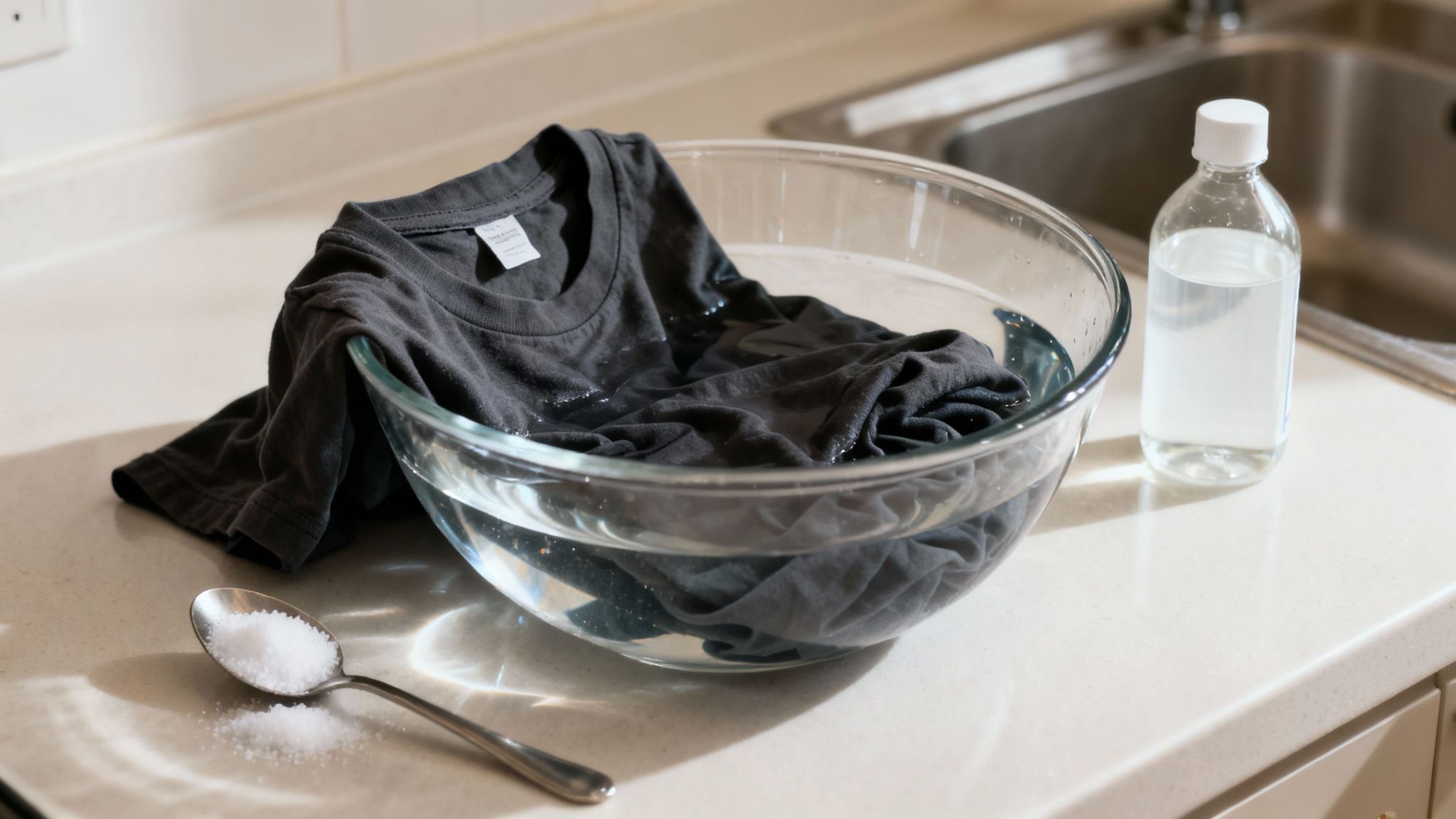
Before you reach for a bottle of chemical fabric softener, take a look in your kitchen cabinet. You probably already have everything you need to transform a stiff, new T-shirt into something wonderfully soft and wearable.
These natural methods are fantastic because they are gentle on fabrics, safe for family members with sensitive skin (and for curious Goldens!), and will not damage that cool graphic print. They work by dissolving the stiff finishing agents and starches that manufacturers use, which is what often gives a new shirt its rigid feel right off the rack.
Let's break down some of my favorite tried-and-true techniques.
The Gentle Power of a Salt Soak
One of the oldest and most reliable tricks in the book is a simple salt brine. It sounds a bit odd, but salt acts as a mild abrasive that gently loosens up and breaks down stiff cotton fibers without causing any harm. Think of it as a mini spa day for your new tee.
All you need to do is dissolve about half a cup of regular table salt in a quart of warm water. A small tub or even a clean sink works perfectly. Submerge your T-shirt completely and let it soak for a few hours, anywhere from one to three is usually enough. Once it's done soaking, just wring it out and toss it into a normal wash cycle.
Here’s a great bonus: for dark or brightly colored shirts, this salt solution actually helps set the dye. This means your colors stay vibrant and are less likely to fade over time.
The White Vinegar Rinse Secret
Another hero from the pantry is plain white vinegar. It is a natural wonder for stripping away the waxy sizing residue that often coats new clothes. And do not worry about the smell, it washes out completely, leaving your shirt scent-free.
You’ve got two great options here:
- Try a Pre-Soak: Mix one part white vinegar with four parts warm water. Let your shirt soak in this solution for about 30 minutes before you wash it. The acetic acid gets to work breaking down those stiffening agents.
- Use It in the Washing Machine: This is my go-to method for convenience. Just pour one cup of white vinegar directly into your machine’s rinse cycle compartment. It works just like a fabric softener, but better.
The real magic of the vinegar rinse is that it clarifies the fabric. Commercial softeners often leave behind a waxy film that can build up over time, but vinegar does the opposite, it cleans away residue. This makes the fabric more breathable and absorbent, which is perfect for an active day with your Golden.
If you have a new shirt with a particularly stiff screen print, starting with the salt soak is a great first step. In fact, some textile studies show that a 30-minute pre-wash soak can soften fabric by 30-50% just by breaking down starches.
A Quick Look at Natural T-Shirt Softening Methods
These simple and pet-safe home remedies are perfect for softening new T-shirts. Here's a quick comparison to help you find the best method for you.
| Method | What You Need | Best For | Key Benefit |
|---|---|---|---|
| Salt Soak | Table salt, warm water | New, stiff cotton tees; brightly colored shirts | Gently breaks down fibers and helps set dye to prevent fading. |
| Vinegar Rinse | White vinegar | All fabrics, especially those with sizing residue | Strips away stiffening agents and acts as a natural softener without waxy buildup. |
| Baking Soda Wash | Baking soda | Deodorizing and softening in one step | Neutralizes odors and gently softens fabric fibers during the wash cycle. |
Ultimately, using these simple household items is a fantastic way to turn any T-shirt from starchy and uncomfortable to your new favorite go-to.
Using Your Washing Machine for Lasting Softness
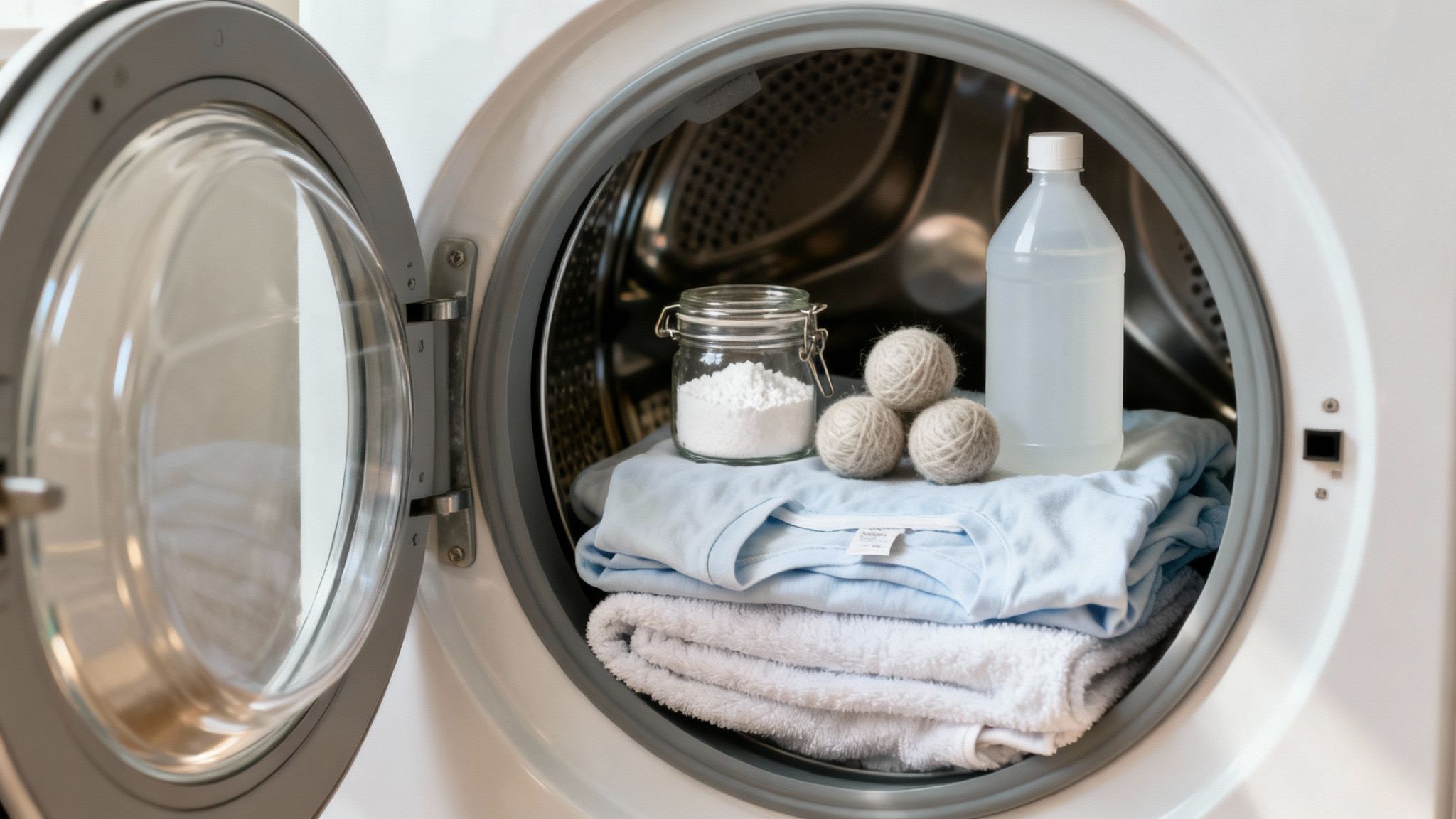
If you do not have the time to soak your shirts, do not worry. Your washing machine can do most of the heavy lifting to get that perfectly broken-in feel. There is no need for harsh chemicals or weird, complicated cycles. A few smart adjustments to your normal laundry routine are all it takes to get that cozy, lived-in softness with barely any extra effort.
An easy trick to start with is being selective about what you wash that new shirt with. For its first few trips through the laundry, toss it in with other soft things, think well-loved towels, a cozy blanket, or your favorite old sweatshirts. The gentle friction from these items acts like a natural fabric polisher, helping to relax the stiff new fibers without causing any damage.
The Baking Soda and Vinegar Power Combo
Ready to get a little more strategic? My go-to method is the unbeatable combination of baking soda and vinegar. It’s simple household science that delivers surprisingly great results, and it's completely safe for your home, your family, and any pets who might like to nap on your laundry.
First, just toss your new T-shirt into the machine along with your regular detergent. Before you start the cycle, sprinkle about half a cup of baking soda right into the drum over the shirt. Baking soda is a fantastic natural cleaner that helps regulate the water's pH, which in turn loosens the fabric fibers and strips away any leftover manufacturing gunk.
Next, pour one cup of white vinegar into the fabric softener dispenser. Your machine will release it during the rinse cycle, where it gets to work dissolving any detergent residue or stiff sizing agents left on the fabric. This simple one-two punch will leave your shirt feeling noticeably softer after just one wash.
Why This Method Works So Well
- Baking Soda: This is your gentle workhorse. It softens both the water and the fabric fibers.
- White Vinegar: It acts as a clarifier, stripping away the stiff stuff without leaving behind the waxy coating that many commercial softeners do.
- No Scent Left Behind: I promise, your shirt will not smell like a salad. The vinegar scent rinses out completely, leaving your clothes smelling fresh and clean.
This technique is so effective because it tackles the root cause of stiffness: the chemical finishing agents used during production. By removing them, you are revealing the true texture of the cotton underneath, which is what gives you that genuine, long-lasting softness.
The goal is not just softness but lasting softness. By using natural ingredients like vinegar and baking soda, you are preventing the buildup that can make shirts feel stiff over time. It is a simple, sustainable habit for keeping your favorite tees in prime cuddling condition.
The Dryer Trick: Wool Dryer Balls
Once the wash cycle is done, the magic is not over. Before you turn on the dryer, skip the disposable dryer sheets and toss in a few wool dryer balls instead. If you have not used these before, they are a total game-changer for softening fabrics naturally.
As they bounce around in the drum, the wool balls create pockets of air between your clothes, which helps the hot air circulate more efficiently and can even shorten your drying time. The best part, though, is how they gently pummel the fabric, fluffing up the fibers and leaving your T-shirt feeling incredibly soft without a single chemical. For the many unisex T-shirts in our collection, this is the perfect finishing touch to get them ready for everyday wear.
Protecting Different Fabrics and Graphic Prints
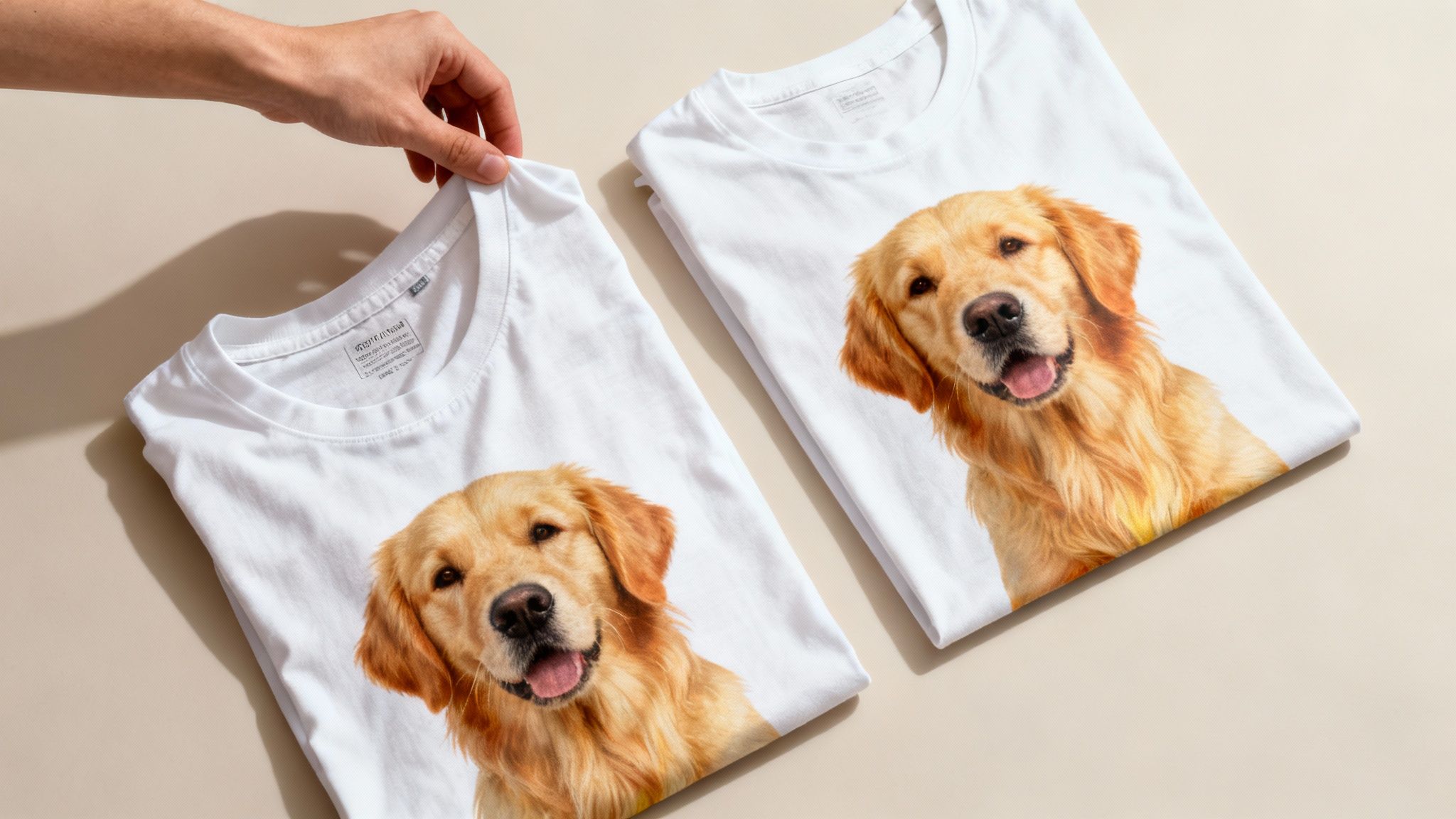
Not every T-shirt in your closet is made the same, and knowing your fabric is the secret to getting that perfect softness without any accidental damage. A method that works wonders on a thick cotton shirt might be a disaster for a delicate vintage blend.
This is especially true when you’re trying to protect a graphic print you love, like the sweet face of a Golden Retriever smiling back at you. Let's break down how to handle different materials so they get softer, not ruined.
Caring for 100% Cotton Tees
Most of our Golden Prints apparel is made from 100% cotton, and for good reason. It’s breathable, naturally soft, and gets even cozier with every wash. The good news is that cotton’s natural fibers respond beautifully to just about every softening method we have covered, from salt soaks to vinegar rinses.
Because cotton is so absorbent, it soaks up these treatments easily, which helps break down stiffness at the fiber level. Just remember to stick with cold or warm water. High heat is the one thing that can make cotton shrink.
For a shirt like our popular Raised by a Golden Retriever tee, a gentle approach ensures both the fabric and that adorable design stay in top condition.
Handling Cotton and Polyester Blends
You probably also have a few cotton-poly blends in your rotation. They are fantastic for their durability and wrinkle resistance, making them great for a day at the dog park. The tradeoff? The synthetic polyester fibers can be prone to pilling, those tiny, annoying fabric balls.
To soften a blend without causing pilling, you will want to focus on methods that use less friction.
- A vinegar soak is your best bet here. It softens chemically without roughing up the fabric surface.
- When you do toss it in the dryer, always use low heat and throw in some wool dryer balls. High heat can actually damage polyester fibers, making them more likely to pill over time.
The most important rule for any graphic tee is to protect the print. You want a shirt that is soft all over, not one with a cracked or peeling design. The best way to do that is to treat the graphic with a little extra care from the very first wash.
Keeping Your Favorite Graphics Vibrant
That awesome design is what makes your shirt special, right? Let's make sure it lasts. Graphic prints sit on the surface of the fabric, and things like high heat, harsh detergents, and friction are their worst enemies.
To keep your Golden looking its best, just follow these simple but crucial rules:
- Turn It Inside Out: Always, always, always turn your graphic tees inside out before washing and drying. This simple step creates a protective barrier, minimizing direct contact with other clothes and the machine drum. It makes a huge difference.
- Wash in Cold Water: Hot water can weaken the adhesive that holds the print to the fabric and cause the colors to fade. Stick to a cold, gentle cycle.
- Avoid High Dryer Heat: Just like hot water, high heat from the dryer can basically "cook" the print, making it brittle and prone to cracking. Tumble dry on the lowest setting you have or, even better, let it air-dry.
How to Keep Your T-Shirts Soft for Years
Getting that new T-shirt perfectly broken-in is one thing, but keeping it that way is the real goal. The secret to that lasting, buttery-soft feel is not some complicated process; it is all about building a few smart habits into your laundry routine.
Honestly, it’s mostly about avoiding the common mistakes that slowly turn soft cotton into a stiff, scratchy mess. With a little care, your favorite shirts will only get better with age, becoming the kind of comfy keepsakes you live in. Perfect for those quiet moments cuddling with your Golden.
Small Tweaks for Lasting Softness
One of the biggest culprits behind stiff, crusty clothes? Using way too much laundry detergent. It feels counterintuitive, but more soap does not mean a better clean. Instead, all that extra detergent leaves behind a filmy residue that coats the fabric fibers, making them rigid over time. Just stick to the measurement lines on the bottle, they’re there for a reason.
Another classic mistake is cramming the washing machine full. When your clothes are packed in like sardines, they can’t agitate or rinse properly. This traps that same detergent residue in the fabric and prevents the natural, gentle friction that helps keep fibers loose and pliable. Always give your shirts plenty of room to tumble.
Simply using the right amount of detergent and not overcrowding the washer will solve the two main causes of long-term stiffness. These small changes protect the fabric's natural softness without any extra effort.
Smart Storage and Maintenance
Believe it or not, how you put your T-shirts away matters. While tossing them on a hanger seems like the quick and easy route, it can actually stretch out the fabric, especially around the neckline and shoulders of heavier cotton tees.
- Fold, Don't Hang: Take a moment to fold your shirts and stack them in a drawer or on a shelf. This simple step protects the fibers from the constant pull of gravity, helping the shirt keep its original shape and soft texture.
- Give Them a Refresh: If you live somewhere with hard water, you know the struggle. Those mineral deposits can build up in the fabric, leaving your clothes feeling dull and stiff. An easy fix is to run a load of your tees with a cup of white vinegar in the rinse cycle every few months. It works wonders to dissolve all that buildup.
- Rotate Your Favorites: It’s easy to grab the same go-to shirt over and over again. Try to rotate through your collection to spread out the wear and tear. This ensures all your tees stay soft and comfy for years, not just the ones at the top of the pile.
Adopting these simple habits will make a massive difference in preserving that perfectly cozy feel across your entire T-shirt collection.
Got Questions? Let's Talk T-Shirt Softening
Even with the best instructions, you are bound to have a few questions when you are trying to get that perfectly worn-in feel for a new shirt. It makes sense to be careful, especially when you have got a favorite graphic tee you want to protect. Here are some quick, real-world answers to the questions we get asked all the time.
Will These Methods Ruin the Graphic on My Shirt?
This is the big one, right? You bought the shirt for that awesome Golden Retriever design, and you want it to last. The good news is that the natural methods we have covered, like the salt soak or vinegar rinse, are incredibly gentle on both the fabric and the print.
The real secret to protecting that graphic comes down to your laundry routine. Always turn your graphic tees inside out before they hit the wash. It is a simple move, but it saves the design from getting roughed up by other clothes. Sticking with cold water is also a must, as high heat can break down the adhesive on the print over time.
How Many Washes Until My Shirt Is Actually Soft?
I wish I could give you a magic number, but it really depends on the shirt's fabric and how stiff it was straight out of the package. That said, you should notice a huge difference after just one dedicated softening wash, especially if you use the baking soda and vinegar technique.
The whole point of that first wash is to break down and rinse away all the stiff sizing chemicals left over from manufacturing. After that, it is all about maintenance, using those wool dryer balls and not overdoing it on the detergent. You should not have to keep doing the intensive soaks.
Your T-shirt should feel dramatically better after the very first treatment. From there, your goal is just to maintain that softness, not repeat the process. This approach is what keeps the fabric and the print looking great for years.
Are Home Remedies Really Better Than Fabric Softener?
You can definitely grab a bottle of commercial fabric softener, but a lot of people are moving away from them, particularly in homes with kids or pets. Here’s why: most of those products work by coating the fabric fibers with a waxy, chemical film.
Over time, that coating can build up, trapping odors and making the fabric less breathable, the exact opposite of what you want in a comfy tee. Our go-to home remedies, like simple white vinegar, do the opposite. They actually strip away residue, leaving you with a softness that is part of the fabric itself.
Which Is Better for Softness: Air Drying or Machine Drying?
Honestly, both have their perks, and the best choice really depends on what you are trying to achieve.
- Machine Drying: Nothing beats a machine with a few wool dryer balls for getting that fluffy, super-soft feel. The tumbling action is what physically loosens up the fibers.
- Air Drying: This is the gentlest route. It’s fantastic for preserving the stretch and life of the fabric, and it is hands-down the safest bet for protecting a graphic print from any heat damage.
Want the best of both worlds? I often use a hybrid method. Tumble the shirt on low heat for just 10 to 15 minutes to get it started, then hang it to air-dry the rest of the way.
At Golden Prints, we want our shirts to feel like they’re already a part of your life with your dog—cozy, comfortable, and ready for anything. We hope these tips help you get your new favorite tee feeling like a worn-in classic from day one. Check out our full collection of Golden-inspired apparel at https://www.goldenprintsonline.com.


