

A Golden Retriever Owner's Guide to a Happy and Healthy Dog
Bringing a Golden Retriever into your family is one of life’s great joys. It is a commitment to a lifestyle that meets their needs for exercise, grooming, and thoughtful nutrition. These dogs are incredibly intelligent and people-focused, so creating a routine that nurtures their happy-go-lucky nature is the key to a wonderful life together.
Building a Thriving Golden Retriever Lifestyle

Welcome to the wonderfully rewarding world of Golden Retriever ownership. These dogs aren't just pets; they quickly become joyful, loving members of the family who truly thrive on routine and connection.
It is no surprise they are so popular. Golden Retrievers consistently rank as one of the most beloved breeds, holding the third most popular spot in the United States, according to the American Kennel Club.
Setting up the right environment from day one is your first and most important job. This goes beyond just putting out food and water. It is about building a safe, stimulating space where your Golden can truly flourish.
Creating a Safe and Loving Home
Think of your home from your Golden's perspective. Before you even bring your puppy through the door, get down on their level and puppy-proof everything. Secure loose electrical cords, move toxic houseplants out of reach, and put away any small objects they might be tempted to swallow.
Giving them a dedicated spot with a comfortable bed creates a sense of security. An orthopedic bed is a great choice to support their joints, which is especially important as they grow into adults and seniors. For feeding, stainless steel bowls are a smart investment. They are easy to clean and do not harbor bacteria like plastic can.
The most important part of your Golden's environment is you. Your presence, patience, and affection are what truly make a house a loving home.
The Core Pillars of Daily Care
A predictable routine helps your Golden feel secure because they know what to expect. While every dog has its own personality, their core needs are universal. The real trick is balancing their high energy with plenty of downtime and social interaction. For those looking to celebrate this special relationship, finding the best gifts for dog owners often means choosing things that make this shared life even better.
To get started, here is a quick look at the fundamental daily components that form the foundation of great Golden Retriever care.
Golden Retriever Daily Care At a Glance
This table breaks down the essentials you will want to incorporate into your daily schedule to keep your Golden Retriever happy, healthy, and thriving.
| Care Area | Daily Recommendation | Key Focus |
|---|---|---|
| Physical Exercise | 45-60 minutes of varied, vigorous activity | Mental stimulation, joint health, and energy release |
| Nutrition | 2 scheduled meals with high-quality dog food | Weight management and digestive health |
| Grooming | 5-10 minutes of brushing (more during shedding) | Coat health, mat prevention, and bonding |
| Training & Play | 15-20 minutes of training or interactive games | Mental enrichment and strengthening your bond |
| Affection & Rest | Ample downtime and positive human interaction | Emotional well-being and physical recovery |
Think of this as your starting point. You will quickly learn your own dog's unique rhythms and can adjust from there, but covering these basics every day is the best way to ensure a long and joyful life together.
Mastering Your Golden Retriever's Nutrition
A Golden Retriever's vibrant energy and stunning coat are built from the inside out, starting with what you put in their bowl. It can be overwhelming to walk down the pet food aisle. The endless bags with pictures of happy dogs can all start to blur together. The secret is to ignore the flashy marketing and learn how to focus on what your Golden actually needs to thrive.
Think of their food as the cornerstone of their well-being. The right nutrition makes a massive difference, especially for their joints and that iconic golden coat. It is all about becoming a savvy label-reader and making a choice that fits your dog, whether that's high-quality kibble, wet food, or a carefully planned raw diet.
How to Decode a Dog Food Label
Your first move should always be to flip the bag over and look at the ingredient list. You want to see a whole protein source, like deboned chicken, beef, or fish, listed as the #1 ingredient. That is your green light, signaling that the food is built on quality protein, not cheap fillers.
Steer clear of foods that list vague ingredients like "meat meal" or "animal by-product" in the top five spots. You should also be wary of a heavy reliance on fillers like corn, wheat, and soy. They do not offer much nutritional value and can sometimes trigger allergies in sensitive Goldens.
A few powerhouse ingredients to keep an eye out for:
- Glucosamine and Chondroitin: These are essential for supporting joint health. For a breed prone to hip and elbow dysplasia, this is one of the best preventative measures you can take.
- Omega-3 & Omega-6 Fatty Acids: Usually from fish oil or flaxseed, these are what give your Golden that show-stopping, shiny coat and healthy skin.
- Antioxidants: Look for ingredients like blueberries, spinach, and sweet potatoes. These are fantastic for giving your dog's immune system a boost.
Portion Control is Everything
Let's be honest: Golden Retrievers are professional beggars and are genetically wired to pack on pounds. It is incredibly tough to say no to those soulful, pleading eyes, but keeping your Golden at a healthy weight is one of the most important things you can do for them. Every extra pound puts a huge strain on their joints, heart, and overall health.
A study from the Association for Pet Obesity Prevention revealed that over 60% of dogs in the U.S. are overweight or obese. For a breed like a Golden, that statistic should be a serious wake-up call for every owner.
Use the feeding guidelines on the bag as your starting point, but remember they're just that, a starting point. You will need to adjust the amount based on your dog's unique age, activity level, and metabolism. Your vet is your best partner in figuring out your dog’s ideal body condition. A great hands-on test? You should be able to easily feel their ribs under a thin layer of fat, but not see them sticking out.
Set a Consistent Feeding Routine
A predictable feeding schedule does wonders for your Golden's digestion and helps keep hunger pangs at bay. Most adult Goldens do best with two measured meals a day, one in the morning and another in the evening. This simple routine helps prevent them from feeling famished all the time and can even lower the risk of bloat, a life-threatening condition.
Imagine pouring your morning coffee into your favorite 'Golden Morning' mug from Golden Prints' while you measure out a perfectly balanced breakfast for your best friend. That small, consistent act of care is truly what responsible ownership is all about.
Sharing Snacks the Safe Way
Sharing a little bite of what you are eating is a great way to bond, but you have to do it smartly. Plenty of "people foods" are perfectly safe for your Golden in moderation, but others are dangerous.
Safe Treats to Share (in moderation):
- Crisp carrot sticks
- Apple slices (no seeds!)
- A few blueberries
- Green beans
- A little cooked, unseasoned chicken or turkey
Foods That Are a Hard No:
- Grapes and raisins
- Onions and garlic
- Chocolate (of any kind)
- Xylitol (an artificial sweetener found in many sugar-free products)
- Macadamia nuts
Whenever you introduce a new food, start small and watch for any signs of an upset stomach. By taking the time to understand their nutritional needs, you're giving your Golden the best possible foundation for a long, happy, and vibrant life.
Your Practical Guide to Grooming and Coat Care
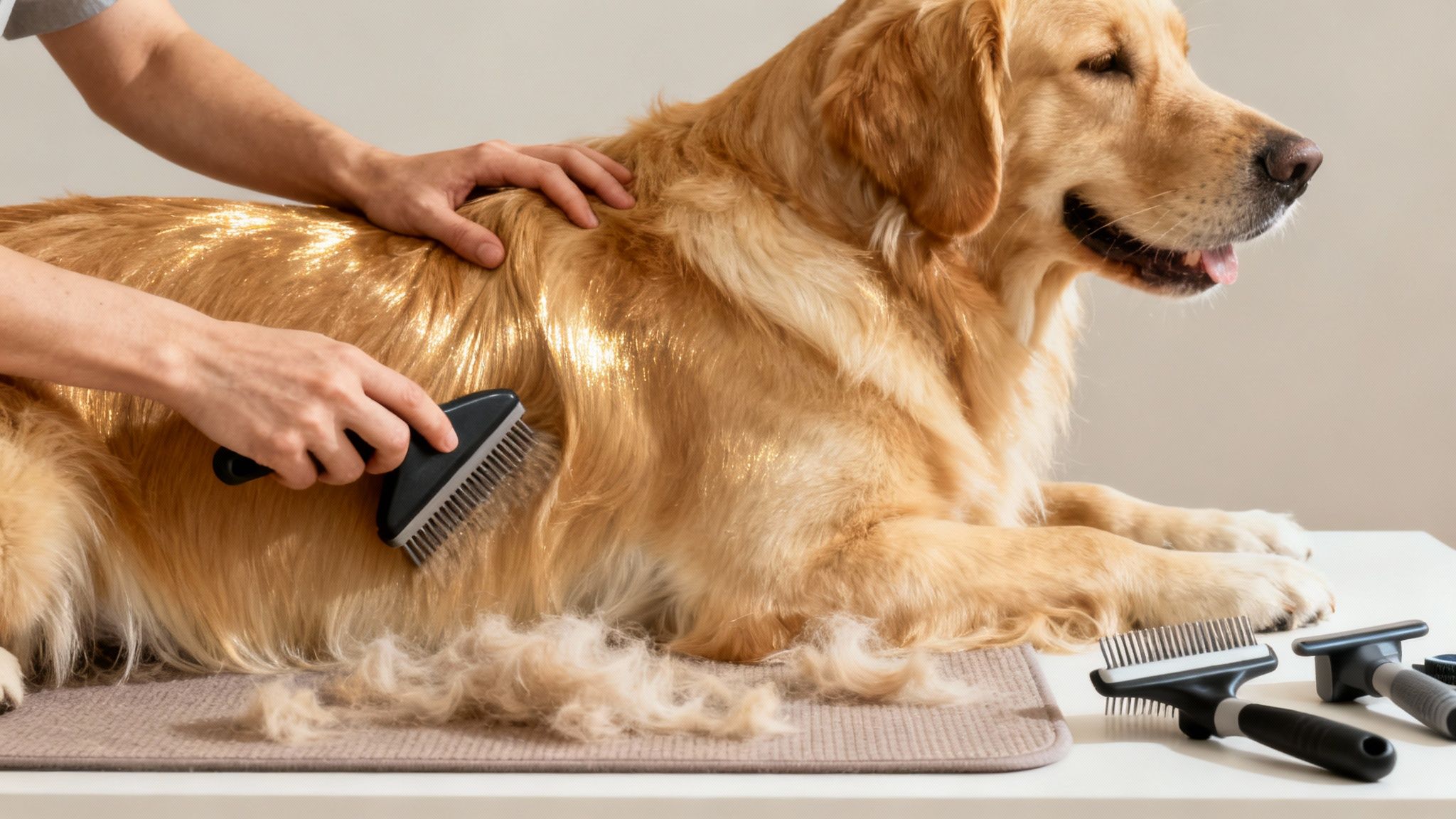
That gorgeous golden coat isn't just for show. It is a weather-resistant double coat, a brilliant piece of natural engineering designed to keep your dog comfortable in all sorts of weather. To keep it healthy, shiny, and mostly off your furniture, you need a solid grooming routine. This is about more than just looking good; it is a cornerstone of good care and a fantastic way to bond with your dog.
Think of these grooming sessions as a weekly wellness check. It is your opportunity to run your hands over their whole body, feeling for any new lumps or bumps, and checking the condition of their skin under all that fur. When you make it a positive, regular event, a potential chore quickly becomes a cherished ritual.
The Brushing Routine You Can't Skip
A Golden Retriever's dense double coat means one thing is guaranteed: shedding. To manage the "golden glitter" that decorates every surface of your home, you will want to brush your dog two to three times a week. Each session only needs to be about 15 minutes.
When the big sheds happen in spring and fall, you will probably find yourself reaching for the brush daily. It's worth it. Regular brushing does more than just catch loose fur; it also spreads their natural skin oils, which gives their coat that beautiful gloss. Most importantly, it prevents painful mats and tangles from forming, especially in those tricky spots behind the ears, under their legs, and in their feathery "pants."
Your toolkit does not need to be extensive, but the right tools make a world of difference.
- Undercoat Rake: This is your best friend for getting deep into that plush undercoat to clear out dead hair without messing up the topcoat.
- Slicker Brush: After the heavy lifting is done with the rake, a slicker brush is perfect for the finishing touches. It smooths the topcoat and collects any lingering fur.
- Metal "Greyhound" Comb: Keep this on hand for gently working through any small tangles you find and for detailed grooming on their feathery bits.
Bathing: Less Is More
Goldens seem to be magnets for every mud puddle they see, so baths are a fact of life. The key is not to overdo it. Too much bathing can strip their coat and skin of protective natural oils, leading to dryness and irritation.
As a general rule, only give them a bath when they are visibly dirty or have that distinct "doggy" smell. For most Goldens, this works out to about once every one to two months. Always use a gentle, high-quality dog shampoo. A pro tip? Make bathtime fun with lots of praise and maybe a lick mat smeared with peanut butter stuck to the tub wall. Always rinse thoroughly, as leftover soap is a common cause of skin issues, and towel-dry them well before they launch into their inevitable post-bath zoomies.
Grooming is an act of love. It is a quiet promise to your dog that you will not only play with them and feed them but also tend to their comfort and health in every possible way.
Nail Trims and Ear Checks
Those nails need attention, too. When they get too long, they can be painful, affecting how your dog walks and even leading to joint problems. The easiest cue? If you can hear their nails clicking on your hard floors, it is time for a trim. Plan on doing this every three to four weeks.
If your Golden gets anxious about the clippers, take it slow. Let them sniff the tool, touch it to their nail without clipping, and give them a high-value treat. You can work up to clipping just one nail at a time. If you're not confident, there is absolutely no shame in letting a professional groomer or your vet handle it.
Finally, those adorable floppy ears are great at trapping moisture and debris, making them a perfect breeding ground for infections. Get into the habit of checking their ears weekly. Look for any redness, unusual odor, or discharge. To clean them, use a vet-approved ear solution on a cotton ball (never a cotton swab, which can damage the ear canal) and gently wipe the outer part of the ear. This simple check can save you from dealing with a painful and expensive ear infection later.
Keeping Your Golden Active, Happy, and Healthy
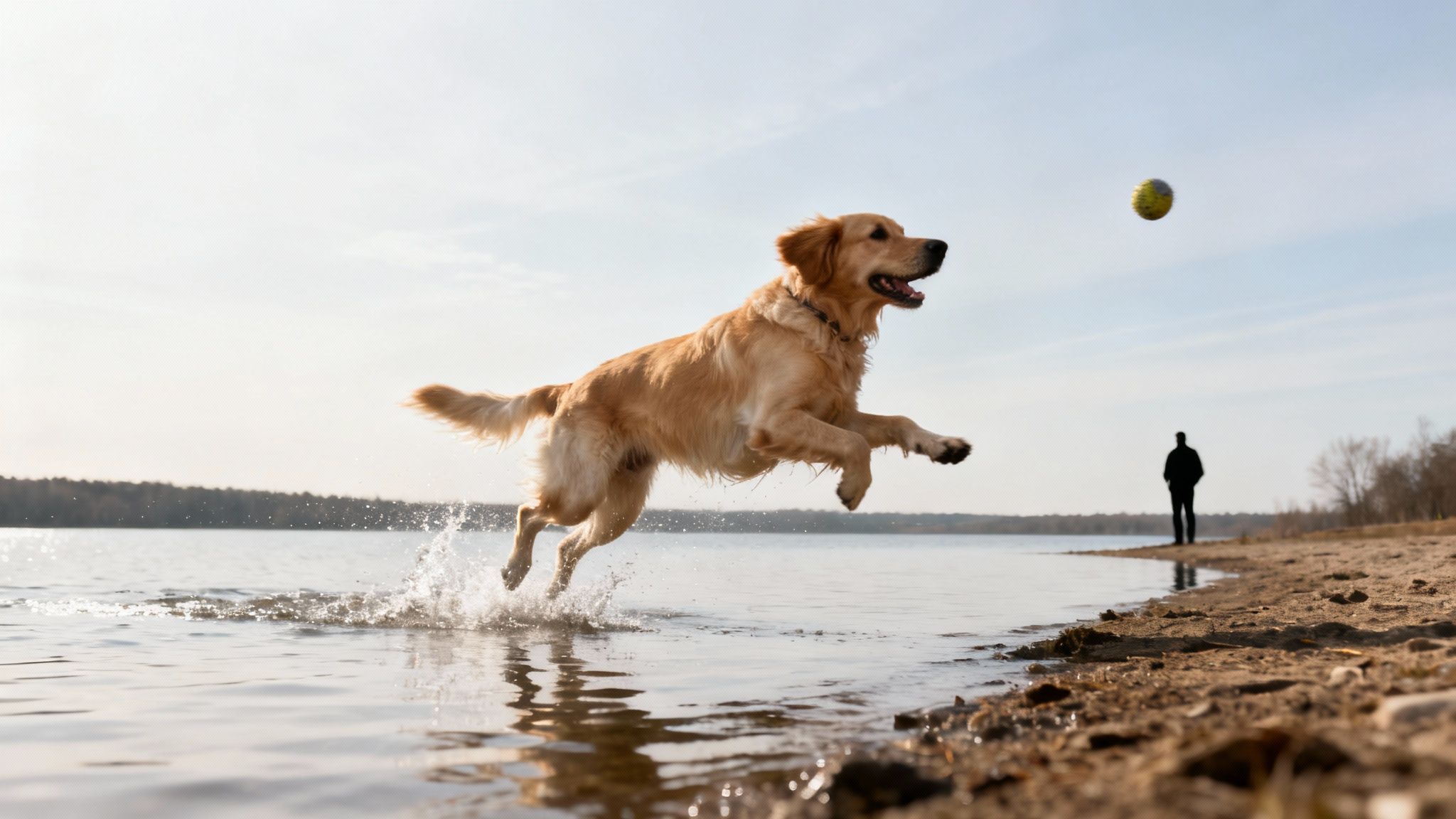
Anyone who has shared their life with a Golden Retriever knows they are more than just happy-go-lucky couch potatoes. These dogs were bred for long, active days in the field, and that hardworking instinct is still very much alive in them. A simple stroll around the block is not going to cut it.
Think of it this way: a tired Golden is a happy Golden. And a happy, tired Golden is not chewing on your favorite shoes or barking at every squirrel. Providing the right kind of exercise is about giving their energy a positive outlet, one that strengthens your bond and keeps them healthy in both body and mind.
Matching Exercise to Your Golden's Stage of Life
Just like with people, a Golden's exercise needs shift and change throughout their life. What is perfect for a boisterous two-year-old could be too much for a puppy or downright painful for a senior. The secret is to tailor the activity to their age and protect their joints.
A healthy adult Golden Retriever in their prime typically needs 45 to 60 minutes of real, heart-pumping exercise every day. You could split this into a brisk morning walk and a serious game of fetch in the afternoon.
Puppies, on the other hand, need short, playful bursts. A great rule of thumb is five minutes of structured exercise for every month of their age, once or twice a day. This protects their growing joints from too much stress. For seniors, the game changes from intensity to consistency. Think gentle, low-impact activities like leisurely sniff-and-stroll walks or a calm swim to keep their muscles strong without straining their joints.
Let Them Be Retrievers!
To truly satisfy a Golden, you have to engage their brain. These dogs were literally born to retrieve, so any activity that lets them tap into that natural talent is pure gold.
- Fetch and Retrieving Games: This is the quintessential Golden activity for a reason. A game of fetch with a durable ball or a floating toy at the lake is heaven for them. To add a mental twist, try teaching them the names of different toys and asking for them specifically.
- Swimming: Most Goldens are absolute water dogs. Swimming is a fantastic, low-impact workout that's easy on their joints, making it a perfect activity for dogs of all ages.
- Hiking and Scent Work: Get them out on the trails. A hike provides a ton of new sights and smells that are incredibly stimulating. You can even make a regular walk more interesting by hiding high-value treats and encouraging them to use that amazing nose to find them.
Remember, exercise is a partnership. The goal isn't just to wear them out; it's about spending quality time together and deepening that incredible bond you share.
Don't Forget the Brain Games
Physical exercise is only half the equation. A Golden's sharp mind needs a workout just as much as its body does. Mental enrichment is the perfect answer for rainy days, post-surgery recovery, or just adding another layer of fun to your daily routine.
Puzzle toys that make your dog nudge, slide, or lift pieces to get a treat are fantastic for this. They encourage problem-solving and can keep a curious Golden happily occupied. You can even get creative and make your own games; try hiding kibble in a rolled-up towel or in a muffin tin with tennis balls covering the holes.
More Than Just a Walk in the Park
Training is another brilliant way to flex their mental muscles. Practicing cues like "stay," "come," and "leave it" in new places challenges their focus and shores up their good manners. It's an incredibly productive way to burn off mental energy.
After a long hike or a fun training session, it is important for both of you to rehydrate. Having a trusty "My Trainer Has Four Legs" water bottle on hand is a great way to remember the adventures you've shared. That feeling of coming home, settling onto the couch, and knowing you have given your best friend everything they need to be happy, healthy, and perfectly tired, that is what it's all about.
Training and Socializing Your Golden Retriever
Training a Golden Retriever is one of the most rewarding parts of owning one. They have this incredible, built-in desire to please you, which makes the whole process feel less like a chore and more like you are just figuring out how to communicate with each other.
The secret is not about being a strict disciplinarian; it is about being a consistent and patient leader. Your goal is to shape a confident, happy dog who understands the rules of the house and is a joy to have around, both at home and out in the world.
The Foundation: Positive Reinforcement
This is the only way to go with a Golden. It is a simple idea: when your dog does something you like, you reward it. That reward, a tasty treat, a burst of enthusiastic praise, or a quick game with their favorite squeaky toy, makes them want to offer that behavior again. This isn't just about teaching commands; it is about building a powerful bond of trust between you.
Keep your training sessions short and sweet, especially with a puppy. Their brains are like sponges, but their attention spans are tiny. Think multiple 5 to 10-minute sessions spread throughout the day instead of one long, frustrating one. Always try to end on a win, like an easy "Sit" they have mastered, so they walk away feeling proud and ready for the next lesson.
Must-Have Commands for a Well-Behaved Dog
A few basic commands are non-negotiable. They are the toolkit you will use every single day to keep your dog safe and well-mannered.
- Come: This one is a potential lifesaver. Start practicing in a quiet hallway, then move to the backyard, and eventually to places with more distractions. Your tone of voice is everything; make it sound like the best party in the world is happening right where you are. When they come, reward them like they just won an Olympic medal.
- Leave It: From a dropped piece of chicken to something questionable on the sidewalk, this command is crucial for impulse control. You can start by covering a boring kibble on the floor with your hand. The second your dog backs off or looks away, praise them and give them a much better treat from your other hand. They quickly learn that ignoring the first thing gets them something better.
- Stay: This teaches patience and self-control. Start small. Ask for a "Stay" for just a single second before saying your release word (like "Okay!") and giving a reward. The key is to gradually increase the time and distance only as they succeed, so you are always setting them up for a win.
The Gentle Art of Socialization
Socialization is one of the most misunderstood parts of raising a puppy. It is not about dragging your pup to a chaotic dog park and hoping for the best. It is the careful, positive process of showing them the world is a safe, fun place. The most critical window for this is between 3 and 16 weeks of age, when their brains are hardwired to accept new things.
Think of it like a scavenger hunt for positive experiences. Let your puppy walk on grass, then carpet, then pavement. Let them hear the vacuum cleaner from another room while you toss them treats. Set up carefully supervised playdates with calm, vaccinated adult dogs who can teach them good doggy manners.
A well-socialized dog is not necessarily the one who greets every person and dog. It is the one who can walk into a new environment and remain calm and confident, not fearful or reactive. That is the real goal.
Handling Common Behavior Bumps in the Road
Even the most angelic Golden will test the waters. Here's how to navigate a few common challenges with patience.
Puppy Nipping and Mouthing Those little needle teeth are no joke. When your puppy puts their mouth on you, let out a high-pitched "Ouch!" and let your hand go limp. This is what their littermates would do to say, "Hey, that was too hard!" The moment they back off, redirect their attention to a chew toy they are allowed to bite.
Jumping on People Goldens love people, and they often show it by trying to get to face-level. The quickest fix is to teach them an alternative. When someone comes to the door, have your Golden on a leash and ask for a "Sit." Your guest should only give affection or a treat once all four paws are firmly on the ground. No sit, no pets.
Leash Pulling A walk is supposed to be relaxing, not a tug-of-war. The moment your dog starts pulling, just stop moving. Become a tree. Only start walking again when the leash goes slack. Yes, your first few walks might only make it to the end of the driveway, but your dog will quickly learn that a loose leash is the key to moving forward.
Their incredible popularity is a huge asset for owners. For years, Golden Retrievers have been one of America's most beloved breeds, meaning there is a massive community and a wealth of knowledge out there. You can check out sites like PetPalaceResort.com for breed popularity insights to see just how much love there is for these dogs. Tap into that community; it is your best resource for raising a happy, well-mannered best friend.
Proactive Health and Preventative Care Strategies

When you bring a Golden Retriever into your life, you become their biggest health advocate. It is about more than just reacting to problems; proactive care is how you give them the best shot at a long, vibrant life right by your side.
Like many purebred dogs, Goldens are unfortunately prone to certain genetic conditions. We see issues like hip and elbow dysplasia, specific types of cancers, and heart ailments more frequently in this breed. Knowing this from day one is not meant to scare you; it is meant to empower you to make smarter, more protective choices.
Building Your Healthcare Partnership
Your veterinarian is the most important partner you will have in your dog's health journey. A strong relationship with them is your foundation. Do not just show up when something is wrong; those annual wellness exams are your chance to get ahead of potential issues, discuss subtle changes you have noticed at home, and stay on track with preventative medicine.
A checkup is so much more than just getting shots. It's a top-to-bottom professional assessment of your dog’s condition, from their weight and dental health to the sound of their heart and lungs. Your vet is the best person to help you customize a plan that covers all the bases:
- Vaccinations: These are crucial for shielding your Golden from serious, and often preventable, diseases.
- Parasite Prevention: A year-round defense against fleas, ticks, and deadly heartworms is non-negotiable.
- Dental Health: Good oral hygiene is key to preventing painful dental disease, which can have ripple effects throughout their body.
"I love the relationships I can build with my clients... we are not only practitioners but family members!" - Spencer Graham, DVM
This quote from Dr. Graham perfectly sums up what you should look for. You want a vet who listens, treats you like a teammate in your dog's care, and helps you feel confident in your decisions.
Your Role as Their First Line of Defense
While your vet is an expert, nobody knows your dog better than you do. You see them every single day, so you are the first person who will notice when something is off. This makes you their most critical health monitor.
Get into the habit of doing a quick, hands-on check once a week. It can be as simple as petting them with a purpose while you are relaxing together. Gently run your hands over their body, feeling for any new lumps, bumps, or sore spots. Take a peek inside their ears for redness or odd smells, and check that their eyes and gums look normal.
Keeping your Golden at a lean, healthy weight is one of the most impactful things you can do for their long-term health. Even a few extra pounds put immense pressure on their joints, which can worsen conditions like hip dysplasia. Excess weight also strains their heart and other vital organs.
Have you noticed a sudden change in their appetite, energy, or potty habits? Do not brush it off. These subtle shifts are often the very first clues that something is not right. Trust your intuition and give your vet a call. Being your dog’s advocate is the greatest gift you can give them. A thoughtful present like a custom Golden Prints tote bag can be a fun way to keep all their vet records and favorite treats organized for those important visits.
Your Top Questions About Golden Retriever Care Answered
We have heard just about every question you can imagine from Golden owners, whether they are on their first pup or their fifth. Everyone just wants to do right by their dog. Let's tackle some of the most common questions that pop up.
How Much Exercise Does a Golden Retriever Really Need?
We always tell people to aim for 45 to 60 minutes of solid, heart-pumping exercise for a healthy adult Golden every day. This is not just a leisurely sniff-around-the-block kind of walk. We are talking about activities that truly engage them.
Breaking it up into two sessions often works best, maybe a brisk walk or jog in the morning and a really good game of fetch in the evening. Goldens love having a job to do, so think about activities like:
- Swimming (a natural favorite!)
- Fetch with a ball or frisbee
- Hiking on a trail
- Canine sports like agility
Just remember, puppies and senior Goldens have different limits. Their joints need more protection, so shorter, less intense playtimes are the way to go.
Are Golden Retrievers Good Family Dogs?
They are not just good; they are fantastic. If you had to pick one of the most patient, gentle, and loving breeds for a family, the Golden would be at the top of the list. They have a natural affinity for children and, with the right introductions, usually get along wonderfully with other family pets.
The secret to unlocking that famous Golden temperament is early and positive socialization. Getting them used to all sorts of people, places, and noises from a young age builds a confident, well-adjusted dog that thrives in the happy chaos of family life.
How Do I Manage All the Shedding?
Welcome to the world of "golden glitter." It gets everywhere, but you can absolutely manage it. Your best friend in this battle is a good grooming routine.
Brushing your Golden 2 to 3 times a week with a solid undercoat rake will work wonders. Seriously, it's a game-changer. But be ready to step it up during their big shedding seasons in the spring and fall. You will probably need to make it a daily ritual then to keep the fur tumbleweeds at bay.
Beyond brushing, a high-quality diet full of omega fatty acids does so much for their coat health. And if you have fully embraced the furry lifestyle, you might as well celebrate it. You can find some amazing gifts for Golden Retriever lovers that really lean into the joy they bring.
At Golden Prints, we turn the love you have for your Golden into cozy apparel, home goods, and heartfelt gifts that feel like home. Shop the collection today and find the perfect way to celebrate your best friend.


